











Skip links

InvestEngine
Review 2026

Overview, highlights & more!

InvestEngine logo

*Your capital is at risk.

Overview of InvestEngine

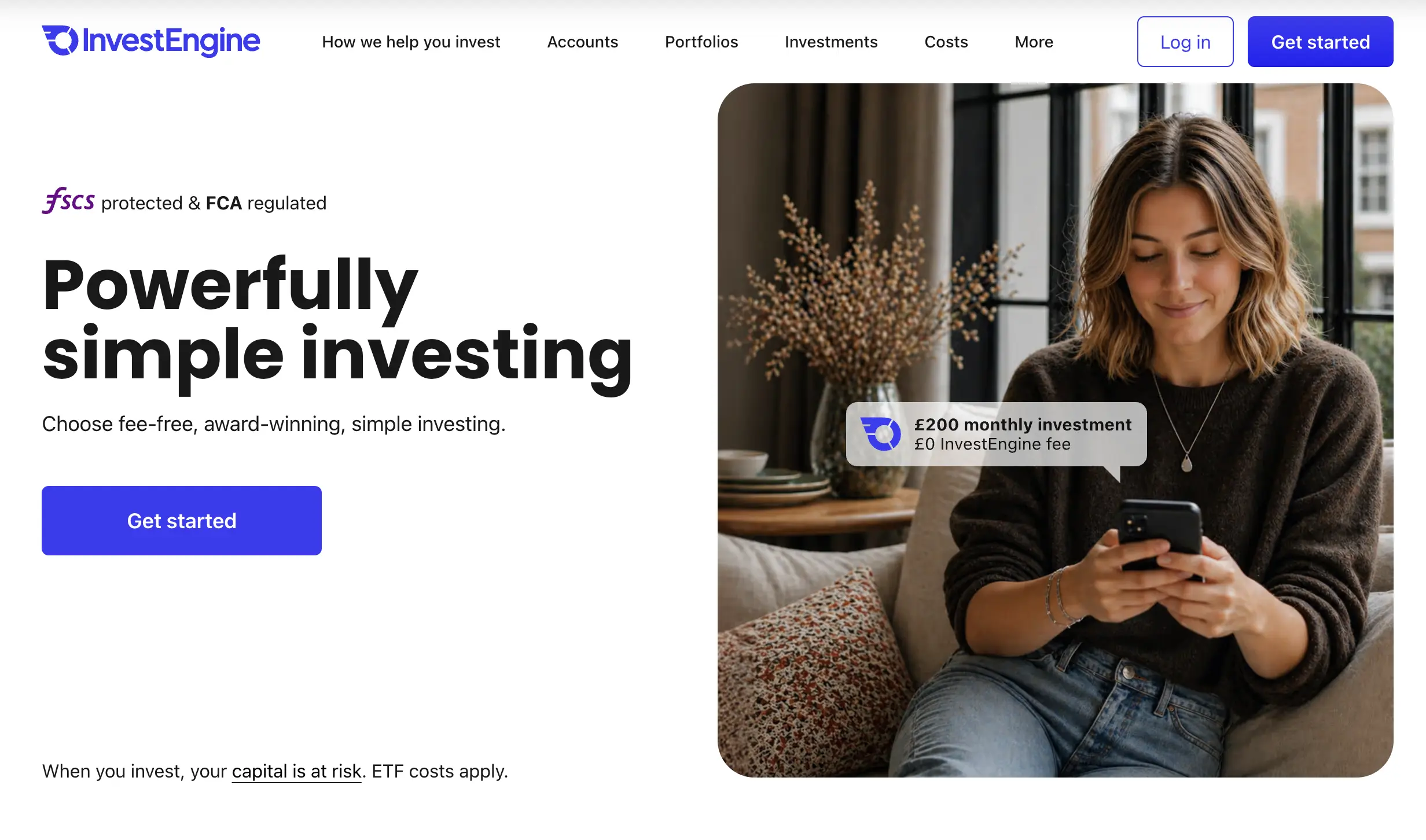
In this YourWalletManager InvestEngine review, we take a close look at one of the fastest growing investment platforms in the UK. InvestEngine has built its name on a simple promise: commission free ETF investing with no platform fees on DIY portfolios.

The platform focuses exclusively on exchange traded funds (ETFs), offering more than 890 of them from providers such as Vanguard, iShares, Amundi and HSBC. New customers currently invest through DIY portfolios, where you choose your own ETFs, because InvestEngine's Managed and LifePlan portfolios are temporarily closed to new clients while the company updates them.

It's important to note that this review is tailored to UK residents.

The information provided on this page and throughout the website is for general information purposes only and does not constitute financial advice. It is important that you conduct your own research and consider your own personal circumstances before making any investment decisions.

InvestEngine dashboard showing portfolio overview

InvestEngine was co-founded by Simon Crookall, who previously co-founded Gumtree, together with Andrey Dobrynin. It says it now has more than 100,000 customers, and it has been named a Which? Recommended Provider in 2023, 2025 and 2026.

Getting started is straightforward. The minimum initial investment is £100, and after that you can put as little as £1 into any ETF thanks to fractional investing.

Platform Highlights

🗺️ Supported CountriesThe United Kingdom
📊 Management fees£0 for DIY; 0.25%/yr for Managed and LifePlans (closed to new clients)
💲 Market spreadVaries by ETF; avg. 0.07% to 0.08%/yr on Managed and LifePlans
⏳ Inactivity fee£0
🏧 Withdrawal fee£0
💵 Minimum Deposit£100 to open; then from £1 per ETF
💡 Products offeredGIA, Stocks and Shares ISA, SIPP, Business Account
🎮 Demo AccountNone
📜 Regulatory entitiesFCA

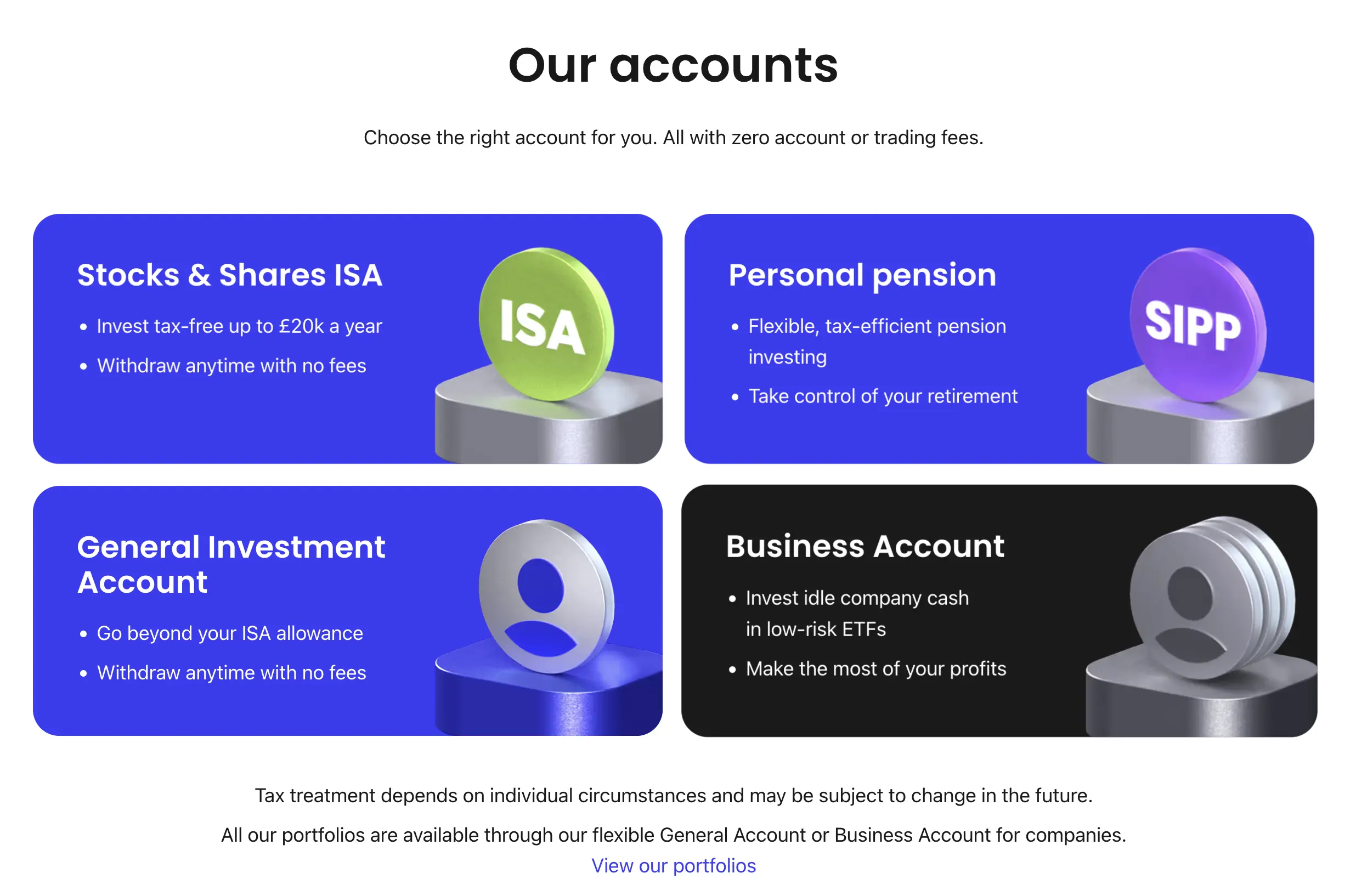
InvestEngine keeps its account line-up simple: a General Investment Account, a flexible Stocks and Shares ISA, a Self Invested Personal Pension (SIPP) and a Business Account for UK limited companies. There is no Cash ISA, Lifetime ISA or Junior ISA.

Inside each account you can run a DIY portfolio, which carries no InvestEngine fees. InvestEngine also runs Managed and LifePlan portfolios for 0.25% a year, but these are currently closed to new clients, and existing clients cannot open new ones, while the company updates them.

ETF costs still apply, starting from 0.03% per year depending on the funds you choose (checked against InvestEngine's costs page on 10 November 2026).

InvestEngine offerings

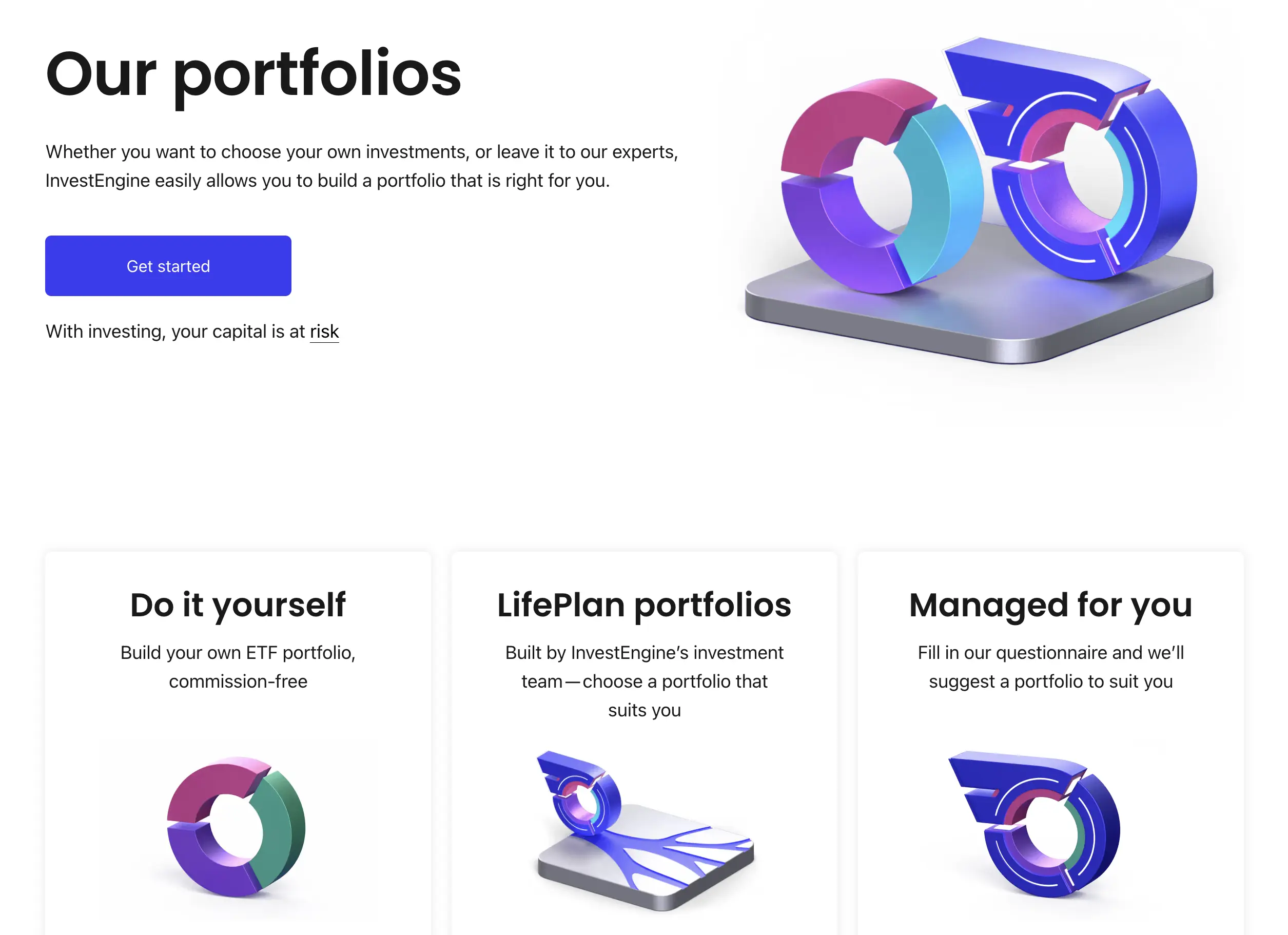
InvestEngine is built entirely around ETFs. Rather than offering thousands of individual shares, it gives you a curated range of more than 890 ETFs and three ways to invest in them, although only the DIY route is open to new clients at the moment.

DIY Portfolios

The DIY option lets you pick your own ETFs and set target weights for each one. There are no platform fees, no dealing charges and no set-up costs; the only costs are the ETFs' own annual charges and market spread. Tools such as one-click rebalancing and AutoInvest keep your portfolio in line with your chosen targets.

InvestEngine DIY portfolio with ETF target weights

Managed Portfolios

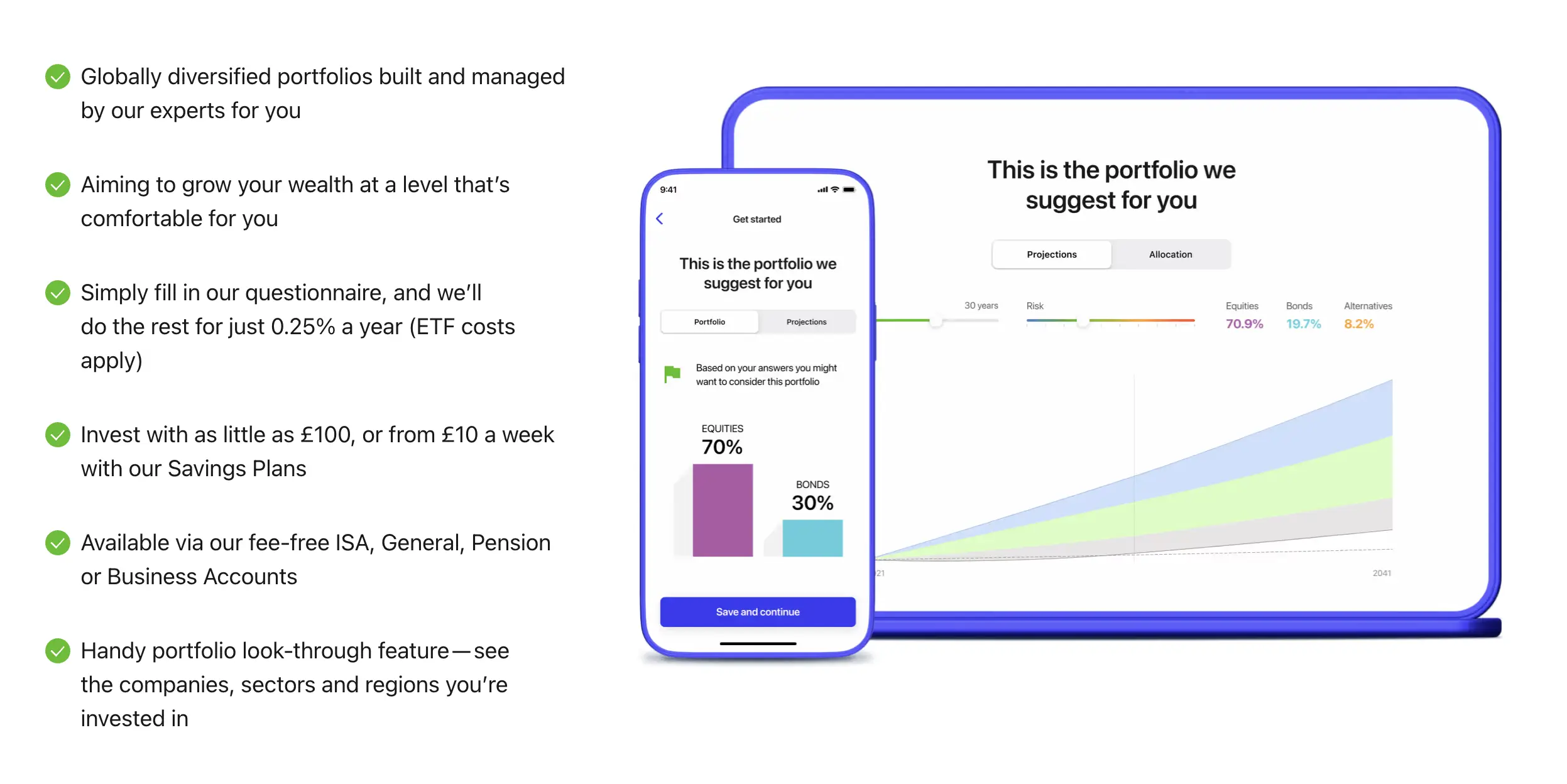
This option is currently closed to new clients. It builds a diversified portfolio matched to your answers to a risk questionnaire, for a 0.25% annual fee, and InvestEngine's investment team monitors and rebalances it for you. The average ETF charge inside the Managed Growth portfolios is 0.12% a year. InvestEngine says it is updating the service and will tell clients when it reopens.

InvestEngine Managed portfolio risk selection

LifePlans

LifePlans are five ready-made portfolios, ranging from 20% to 100% in shares, built and managed by InvestEngine's investment team. You pick the one that matches the level of risk you are comfortable with and the team keeps it rebalanced, for 0.25% a year. Like Managed portfolios, LifePlans are currently closed to new clients.

Accounts: GIA, ISA, SIPP and Business

InvestEngine account types including ISA and SIPP

Each account can hold DIY portfolios, as well as Managed and LifePlan portfolios for clients who already have them. Limited companies can invest surplus cash through a Business Account. The ISA, SIPP, GIA and Business Account all carry no account fees.

Whichever route you choose, InvestEngine’s portfolio look-through tool shows the combined exposure of all your ETFs across regions, sectors and even individual companies. It is a genuinely useful way to spot concentration risks before they become a problem.

Savings Plans let you automate regular investing on a weekly, fortnightly or monthly schedule, paid by Direct Debit or through Open Banking. With AutoInvest switched on, dividends from distributing ETFs are reinvested automatically too. If a tax wrapper is your priority, our guides to the best stocks and shares ISAs and the best SIPP providers compare InvestEngine with other UK platforms.

For now, new clients can only open DIY portfolios, so you need to be comfortable choosing your own ETFs. If you would rather have someone else manage your money, look at the managed options in our alternatives section below, or check InvestEngine’s website to see whether its Managed service has reopened.

Advantages

Zero platform fees on DIY portfolios

You pay no account fees, dealing charges or commissions when you build your own ETF portfolio; only the ETFs' own costs apply.

No account fees on the ISA, SIPP or GIA

The flexible Stocks and Shares ISA, the SIPP and the General Investment Account carry no account charges, which makes long-term, tax-efficient investing cheaper than on many rival platforms.

Fractional investing from £1

Once your account is open you can invest from just £1 in any ETF, so even small regular contributions can be spread across a whole portfolio.

More than 890 ETFs from leading providers

The range covers global, regional, sector and thematic equity ETFs plus bonds and commodities, from providers such as Vanguard, iShares, Amundi and HSBC.

Powerful automation tools

Savings Plans, AutoInvest, one-click rebalancing and automatic dividend reinvestment take most of the admin out of long-term investing.

Open a fee-free Stocks and Shares ISA or SIPP with InvestEngine.

Your capital is at risk.

Your capital is at risk.

Disadvantages

ETFs only, and no Junior, Lifetime or Cash ISA

You cannot buy individual shares, investment trusts or funds outside the ETF range, and there is no Junior ISA, Lifetime ISA or Cash ISA, so some investors will need a second provider.

Managed portfolios closed to new clients

Managed and LifePlan portfolios are temporarily unavailable to new clients, and InvestEngine has not given a relaunch date. Beginners who want a hands-off option currently need to look elsewhere.

No interest on uninvested cash

InvestEngine retains the interest earned on cash balances, so it pays to stay fully invested or hold spare cash elsewhere.

Fee Structure at a Glance

InvestEngine fees

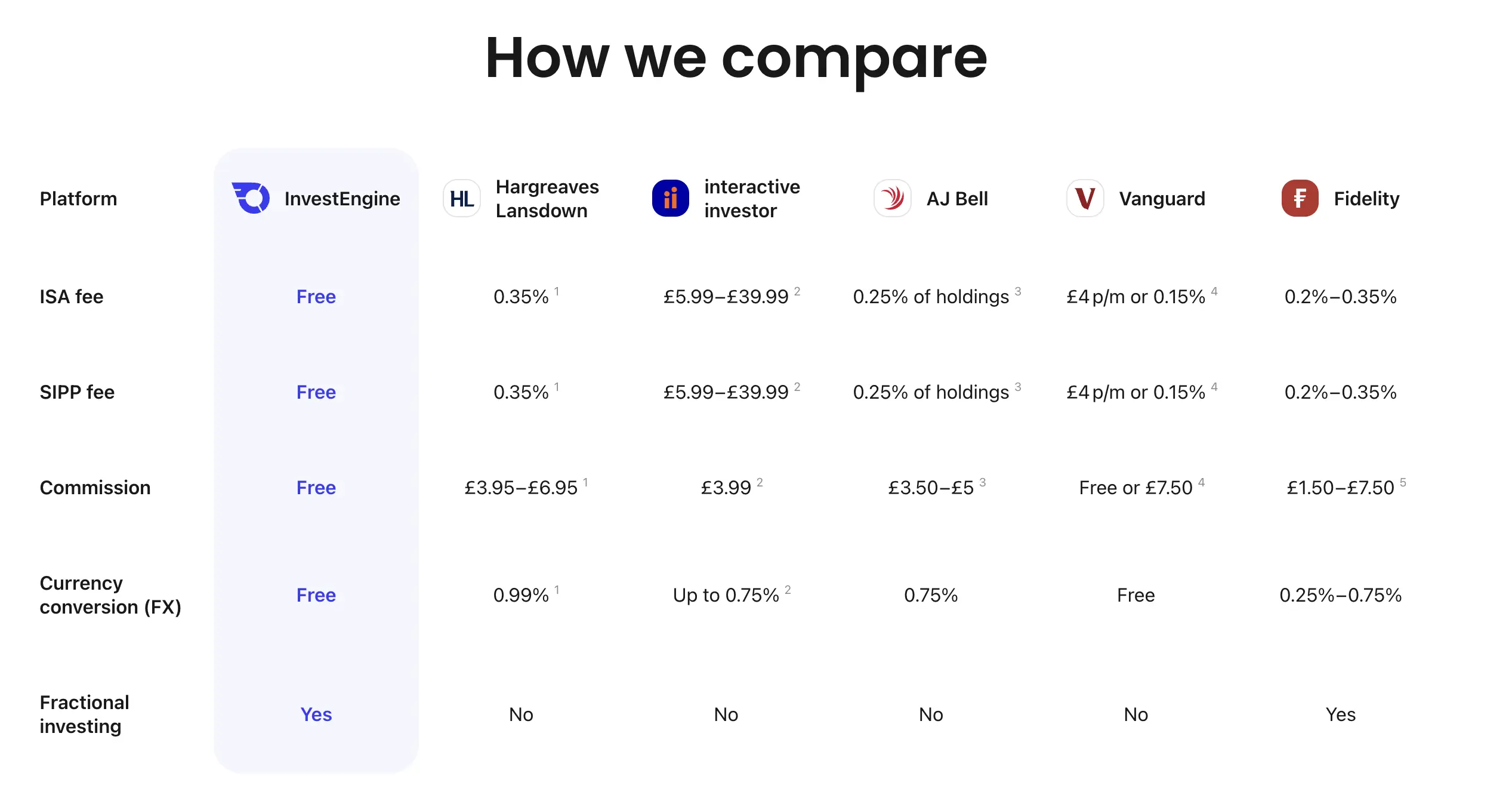
InvestEngine’s headline appeal is how little of your money it takes. DIY portfolios carry no platform fee, no dealing charges and no set-up, withdrawal or transfer fees. Managed portfolios and LifePlans cost 0.25% per year, calculated daily and collected monthly, but are currently closed to new clients. The SIPP also has no account fee, which makes it one of the lower-cost personal pensions on the UK market.
InvestEngine fees comparison showing zero platform charges

Fund cost

The ETFs themselves have annual charges set by the fund providers, not by InvestEngine. On DIY portfolios these start from 0.03% per year depending on the funds you pick, while the average ETF charge inside the Managed Growth portfolios is around 0.12% per year. These costs are built into each ETF’s performance rather than billed separately.

Market spread

There is also a small difference between the buying and selling price of each ETF, known as the market spread. On Managed portfolios this averages roughly 0.07% to 0.08% per year.

One further point worth knowing: InvestEngine retains the interest earned on any uninvested cash in your account. It therefore makes sense to keep your money invested, or to move spare cash to an interest-paying account elsewhere.

InvestEngine's Customer Support

Available customer support channels:

Email and Contact Form

Email support@investengine.com or use the contact form on the website. The team works from 5:30am to 11:00pm on weekdays and 7:00am to 10:00pm at weekends, and InvestEngine says it aims to reply within a few hours during those times.

No Phone or Live Chat

InvestEngine does not offer phone or live chat support. Everything is handled by email or the contact form, and you can also send a secure message from your account.

Community Forum

An active forum where investors share portfolios, questions and feedback, with InvestEngine staff regularly joining the discussions.

InvestEngine supports clients by email and its contact form only, which is part of how it keeps the platform free. The upside is long opening hours: the team works early mornings, evenings and weekends, when many traditional brokers’ phone lines are closed.
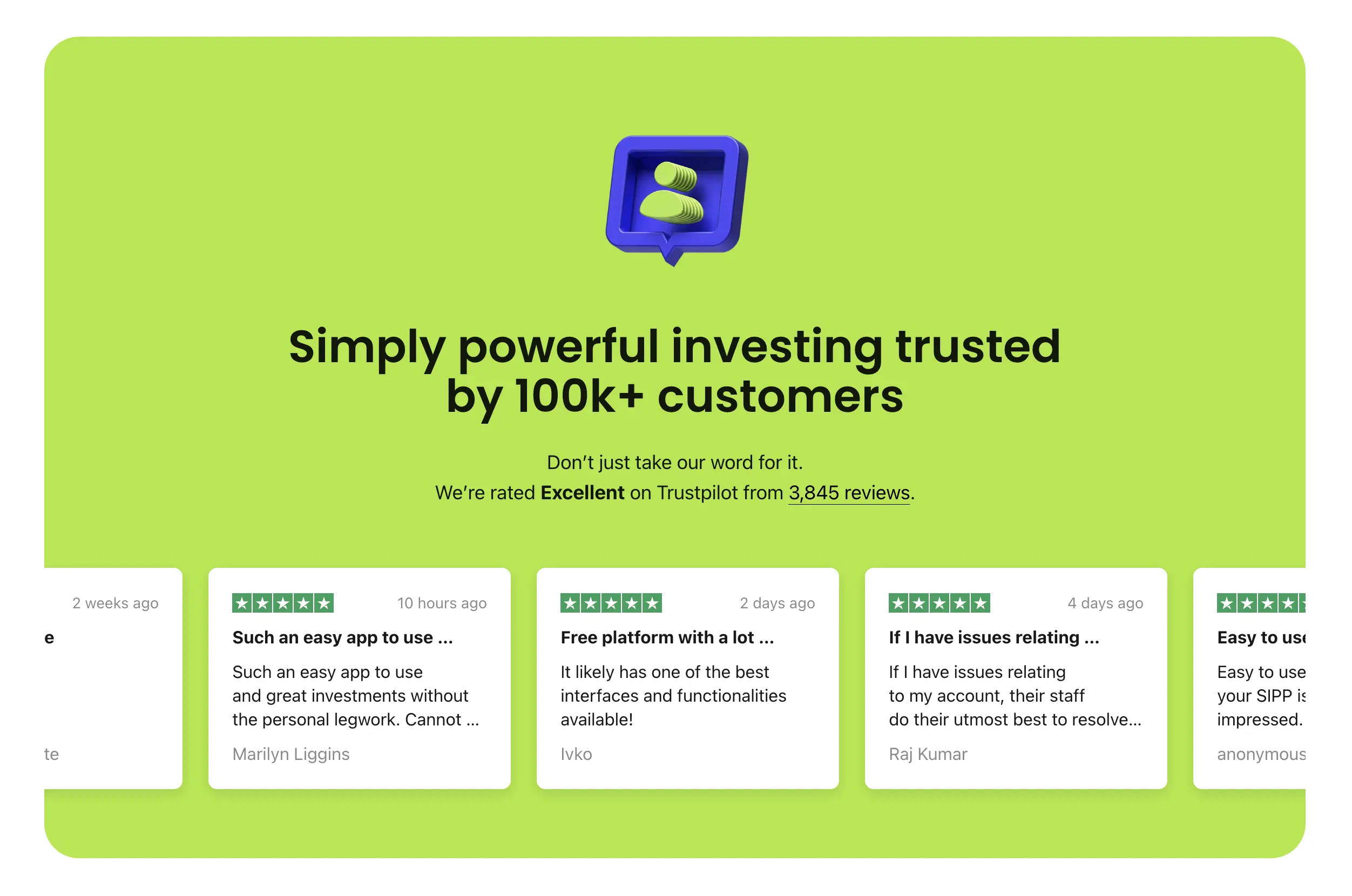
Customer feedback is broadly positive. InvestEngine is rated Excellent on Trustpilot from more than 5,000 reviews, according to its website (checked 10 November 2026). Reviewers frequently praise the clear answers and the smooth account opening and transfer process.
InvestEngine Trustpilot reviews rated Excellent

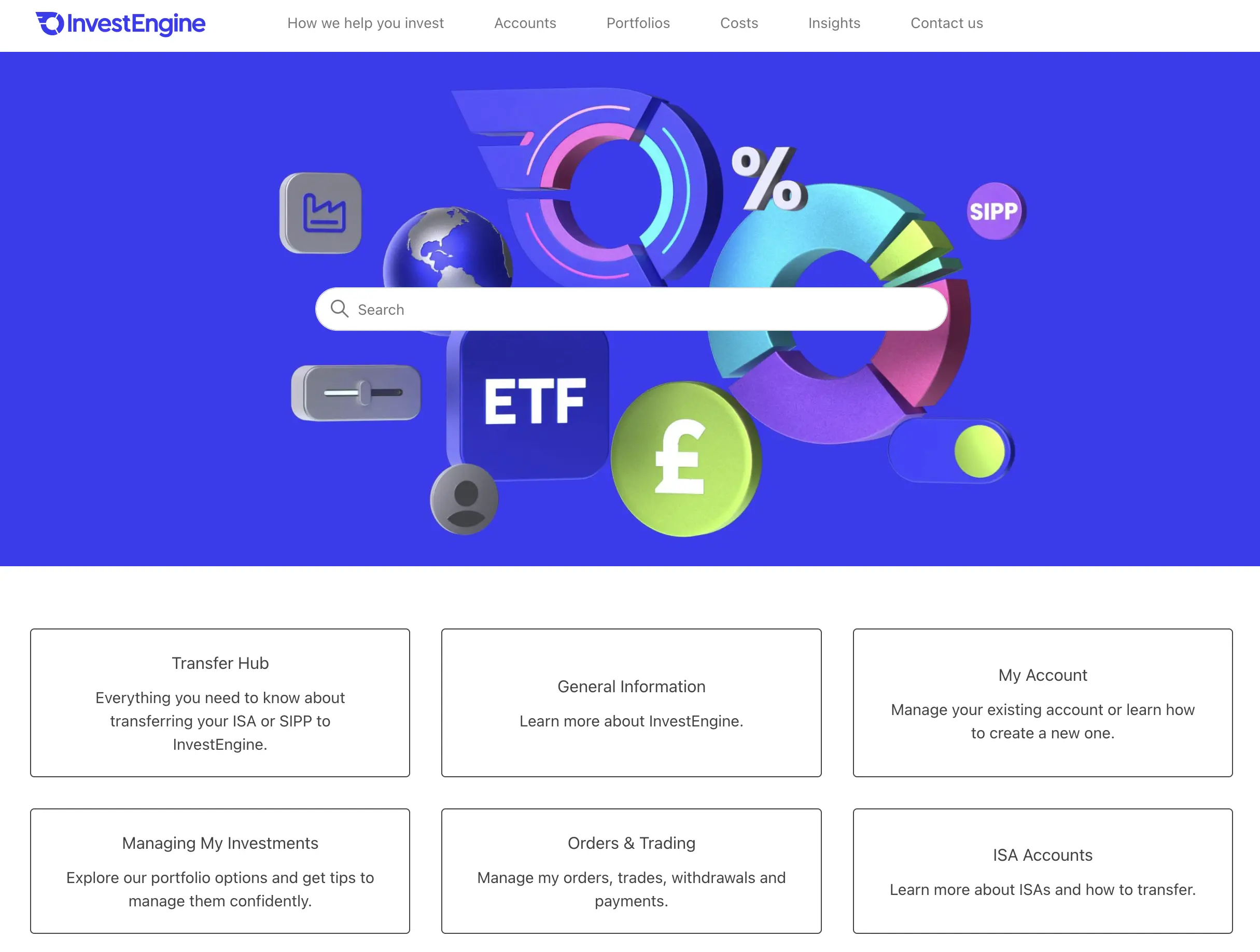
A comprehensive Help Centre covers most routine questions with clear step-by-step guides, and the community forum doubles as a useful learning resource for newer investors.

InvestEngine community forum
Overall, the lack of live chat and a phone line will not suit everyone, but the long support hours make the email-only model work well for most investors.

Account Setup Process

Opening an InvestEngine account is entirely digital and takes a few minutes. You provide your name, address, date of birth and National Insurance number, and InvestEngine runs identity checks as part of sign-up.

It is important to note that InvestEngine accounts are only available to UK residents aged 18 or over, and the SIPP is open to UK residents aged 18 to 75.

If the checks cannot verify you, you may be asked to upload your ID and proof of address. Once verified, you choose your account type and build your DIY portfolio.

Funding is flexible: you can pay in by instant bank transfer through Open Banking, set up a regular Savings Plan, or make a manual bank transfer. Key points at a glance:

Existing investments can be brought across too. ISA and pension transfers are free, and InvestEngine now accepts pension transfers from most major providers. For a full ISA transfer into a DIY portfolio, ETFs that InvestEngine also offers can usually move in-specie, without being sold. Other holdings, such as individual shares, and partial transfers are sold and moved across as cash, so check your current provider’s exit fees first.
Withdrawals are free. InvestEngine places trades once a day, so allow time for any sale to settle before the cash reaches your bank. Helpfully, the flexible ISA lets you withdraw and replace money within the same tax year without losing any of your annual allowance.

Regulatory Safeguards

InvestEngine is operated by InvestEngine (UK) Limited, which is authorised and regulated by the Financial Conduct Authority under firm reference number 801128. Client money is held in segregated accounts at UK banks and custodians, separate from the company’s own money.

If the company were ever to fail with a shortfall in client assets, the Financial Services Compensation Scheme (FSCS) protects eligible investment claims up to £85,000 per person. Bear in mind that this protects you against the platform failing, not against normal market movements: the value of your investments can still go down as well as up.

InvestEngine alternatives worth considering

In our search for alternative investment platforms, we examined fees, ease of use, product ranges, security and user feedback. If your priority is picking individual shares alongside funds, our Trading 212 review covers the closest low-cost rival, while Vanguard is the natural comparison for dedicated index investors.

Best for shares as well as ETFs

Trading 212

Commission-free shares and ETFs with a flexible Stocks and Shares ISA, a Cash ISA and a SIPP, if you want individual companies alongside funds.

Visit broker →

Capital at risk.

Best for ready-made funds

Vanguard

Vanguard’s own LifeStrategy and target retirement funds, as well as its ETFs, in an ISA, SIPP or Junior ISA.

Visit broker →

Capital at risk.

Best fully managed alternative

J.P. Morgan Personal Investing (Nutmeg)

Managed portfolios from £500 with a 14-year published track record, if you would rather have the investing done for you.

Visit broker →

Capital at risk.

Best for funds and research

Hargreaves Lansdown

A wide range of funds, shares and bonds, plus in-depth research, if you want more choice than an ETF-only platform.

Visit broker →

Capital at risk.

For experienced investors

Interactive Brokers

Access to markets worldwide and professional-grade tools, better suited to confident, hands-on investors.

Visit broker →

Capital at risk.

Every platform here is authorised by the FCA. For a head-to-head with the closest rival, see Trading 212 vs InvestEngine, or answer a few questions in our Find My Broker quiz.

Frequently Asked Questions

Yes. InvestEngine (UK) Limited is authorised and regulated by the FCA (FRN 801128), client assets are held separately from company money, and eligible investment claims are protected by the FSCS up to £85,000 per person.
It can be. The app is simple and features such as Savings Plans and one-click rebalancing make regular investing easy, but new clients currently have to choose their own ETFs because Managed and LifePlan portfolios are closed to new clients. Beginners who want a fully managed option may prefer a robo-adviser for now.
A General Investment Account, a flexible Stocks and Shares ISA, a SIPP and a Business Account for limited companies. There is no Cash ISA, Lifetime ISA or Junior ISA.
DIY portfolios have no platform fees or dealing charges. Managed portfolios and LifePlans cost 0.25% per year, although they are currently closed to new clients. ETF costs apply in all cases, starting from around 0.03% per year depending on the funds you choose.
No. InvestEngine offers ETFs only. If you want to hold companies such as Apple or Tesla directly, you would need a different platform or a second account elsewhere.
No. There are no fees for deposits, withdrawals, transfers in or out, or account inactivity.
Yes, ISA and pension transfers in are free. For a full ISA transfer into a DIY portfolio, ETFs that InvestEngine also offers can usually move in-specie, without being sold. Other holdings and partial transfers are sold and moved as cash, and your old provider may charge exit fees, so check before you transfer.
Client investments are ring-fenced from the company's own assets, so they would normally be returned to you or moved to another provider. If there were a shortfall, the FSCS covers eligible investment claims up to £85,000 per person.

Closing Thoughts and Conclusion

InvestEngine has earned its reputation as one of the cheapest ways to invest in ETFs in the UK. Fee-free DIY portfolios, no account fees on the ISA, SIPP and GIA, fractional investing from £1 and genuinely useful automation make it a strong home for long-term ETF investors.
The trade-offs are clear rather than hidden: you cannot buy individual shares, there is no Junior, Lifetime or Cash ISA, uninvested cash earns nothing, and Managed and LifePlan portfolios are currently closed to new clients, so you need to be comfortable choosing your own ETFs. If you can live with those limits, InvestEngine is very hard to beat on cost. As always, only invest money you can afford to leave alone for the long term.

Other recommended brokers

How we review brokers

This review follows the same process we apply to every broker, so you can see what the verdict above is actually based on.

  • What we assessCost, safety and regulation, investment range, platform experience, account options, and support.
  • Where it comes fromFee schedules, key features documents, terms and conditions, and the FCA Register.
  • How often we checkAt least quarterly, and sooner when a broker changes its charges or accounts.
  • IndependenceCommercial relationships do not change our verdict, or what we write about a broker.
Every broker we review is authorised by the Financial Conduct Authority.Our review methodology

Don't forget to visit our Knowledge Hub for more useful information on all things personal finance

How does InvestEngine compare?