
[…]

Broker reviews
Choose a UK investing platform
 eToro
eToro Plus500
 Interactive Brokers
 J.P. Morgan
 Vanguard UK
 Trading 212
 AJ Bell
 Trading.com
 Lightyear
 Webull UK
 XTB UK
 Robinhood UK
 Hargreaves Lansdown
 Interactive Investor
 InvestEngine
Every review covers fees, account types, safety and FCA regulation, and is updated as providers change their pricing.
Fees, accounts, safety and our verdict

By Dimitar Kanazirski, Editor-in-chief
Published: | Fact-checked by: David Katzarov | Last updated:
Our verdict in brief
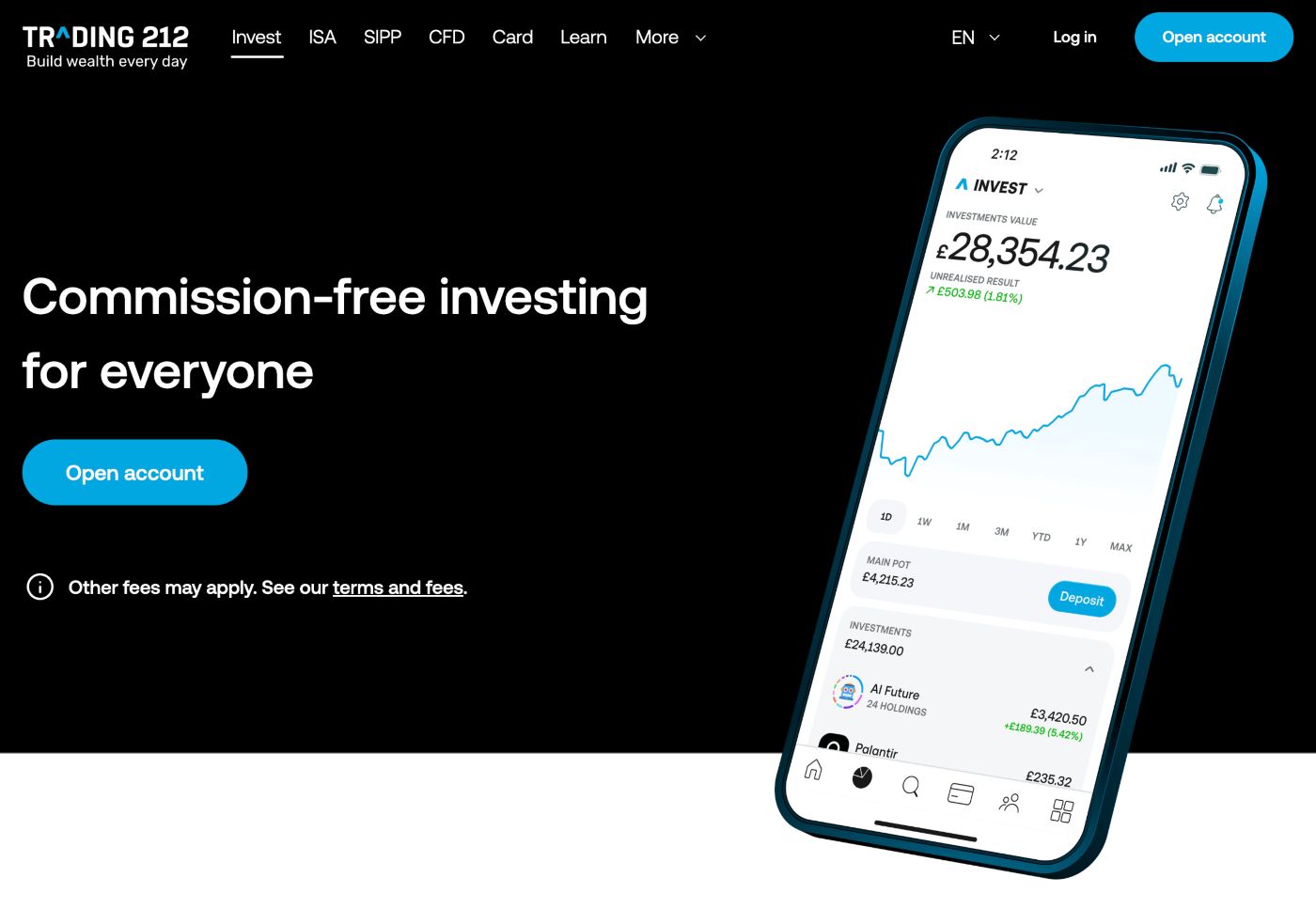
Trading 212 is one of the cheapest ways to invest in shares and ETFs in the UK: no commission, no platform fee and a £1 minimum, with the 0.15% FX fee the main cost most people meet.
It now offers an Invest account, a Stocks and Shares ISA, a Cash ISA and a SIPP in one app, run by an FCA-authorised UK firm.
It suits cost-conscious investors who are happy to choose their own investments. If you need funds, bonds, pension drawdown or in-depth research tools, compare the alternatives first.
Pros
Cons
The information provided on this page and throughout the website is for general information purposes only and does not constitute financial advice. It is important that you conduct your own research and consider your own personal circumstances before making any investment decisions.
Trading 212 is a low-cost, mobile-first UK broker for stocks and ETFs. There is no commission on dealing, no platform or custody fee and no inactivity fee, the minimum investment is £1, and portfolio transfers in and out are free. The one recurring cost most people meet is the 0.15% FX fee on in-app currency conversion.
UK clients contract with Trading 212 UK Ltd, authorised and regulated by the FCA under firm reference number 609146. Uninvested cash held with partner banks is protected by the FSCS up to £120,000 per person per bank. FSCS investment protection is a separate and lower limit of £85,000.
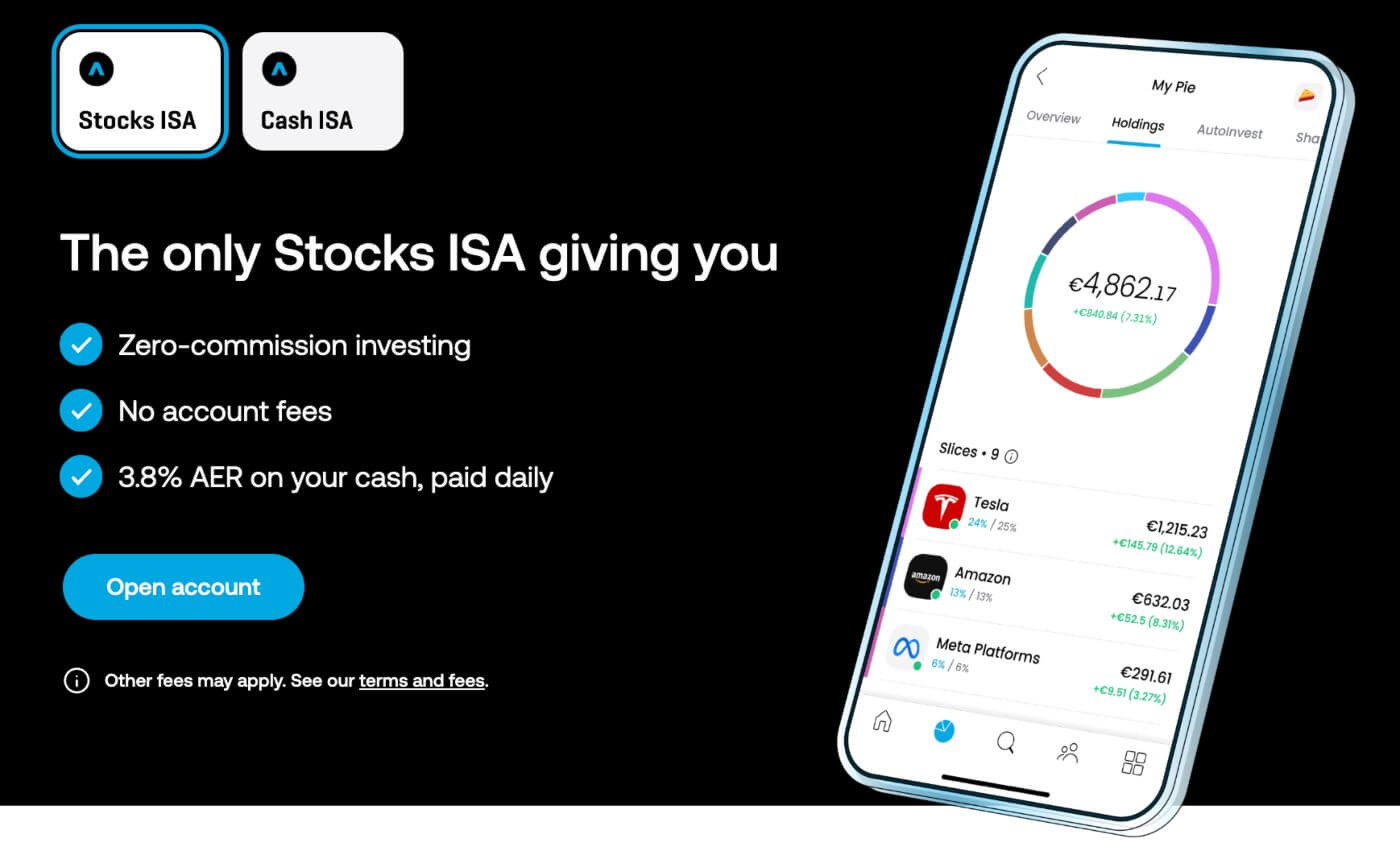
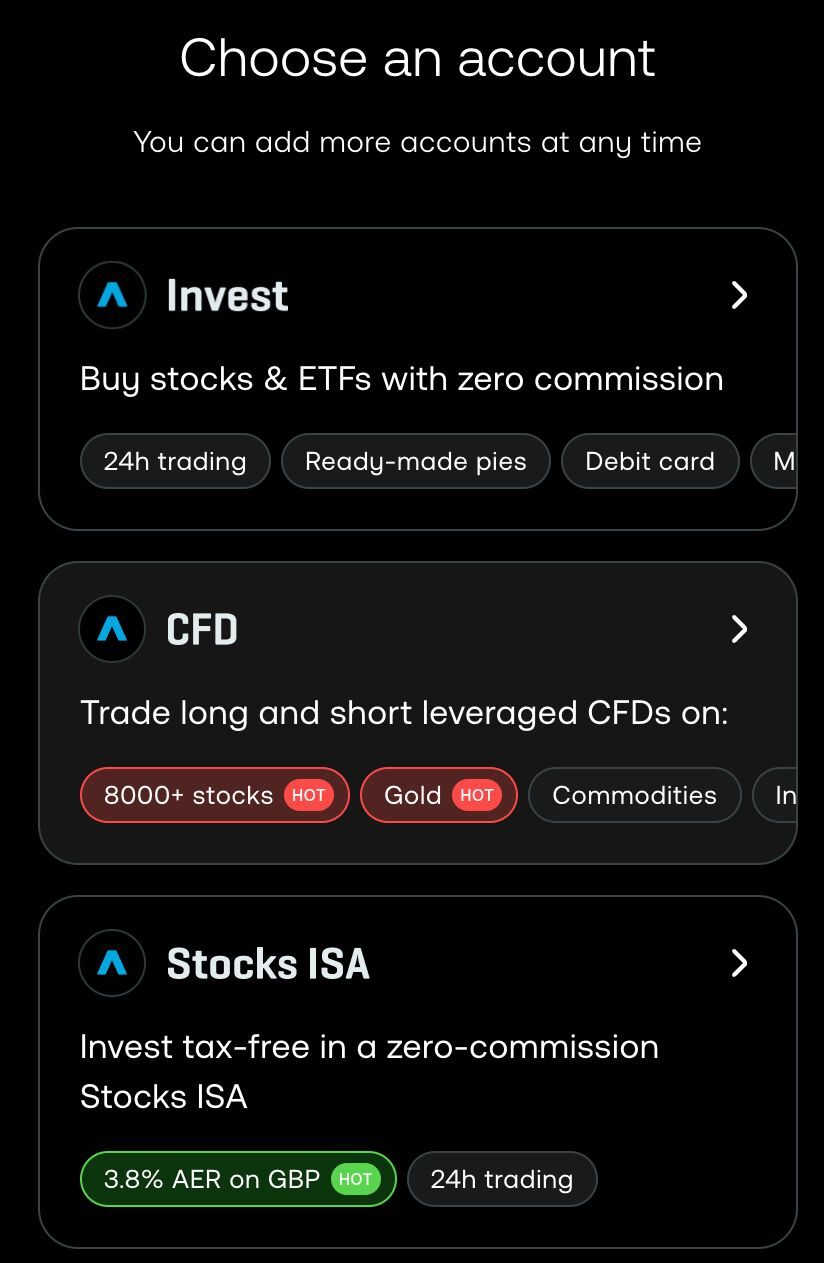
The available accounts are the Invest account, a Stocks and Shares ISA, a Cash ISA, a SIPP launched in 2026 and a separate CFD account. Interest on uninvested cash is paid daily once enabled, at 3.8% AER on GBP as of 5 August 2026.
It suits cost-conscious investors who want stocks and ETFs inside a tax wrapper and are happy with a self-directed app. It does not suit anyone who needs mutual funds, unit trusts, OEICs, direct bond dealing or pension drawdown, none of which Trading 212 offers.
| 🗺️ Supported Countries | The United Kingdom, Europe, Worldwide (exceptions apply) |
| 📊 Management fees | No platform, custody or inactivity fee |
| 💲 FX Fee | 0.15% in-app conversion, 0% on 212 Card transactions |
| ⏳ Inactivity fee | No |
| 🏧 Withdrawal fee | No |
| 💵 Minimum Deposit | £1 for GIA & ISA / £10 for CFD account |
| 💡 Products offered | Invest (GIA), Stocks and Shares ISA, Cash ISA, SIPP, CFD account |
| 🎮 Demo Account | Yes |
| 📜 Regulatory entities | FCA (UK clients contract with Trading 212 UK Ltd, FRN 609146) |
The platform pioneered fractional share investing starting at just £1, which suits investors building a portfolio gradually. While some see Trading 212 only as a beginner-friendly broker, experienced investors can diversify across thousands of stocks and ETFs from major global exchanges while keeping costs low.
It is important to note that UK clients contract with Trading 212 UK Ltd, which is registered in England and Wales and is authorised and regulated by the Financial Conduct Authority under firm reference number 609146.
Other Trading 212 entities are authorised elsewhere: Trading 212 Markets Ltd in Cyprus (CySEC 398/21), Trading 212 EU GmbH in Germany (BaFin 10109603) and Trading 212 AU Pty Ltd in Australia (ASIC AFSL 541122). These are not the entity holding your account if you are in the UK. We set out exactly which protections apply to your cash and your investments further down this review.
Trading 212 caters to a diverse range of financial preferences and investment strategies through various account types and specialized services:
Allows investing in stocks and ETFs without commission fees, making it well suited to straightforward buy and hold investing.
You can trade across major exchanges including the London Stock Exchange, NYSE, NASDAQ, Xetra, Gettex, Euronext Paris, Euronext Amsterdam, Euronext Lisbon, Bolsa de Madrid and Wiener Börse.
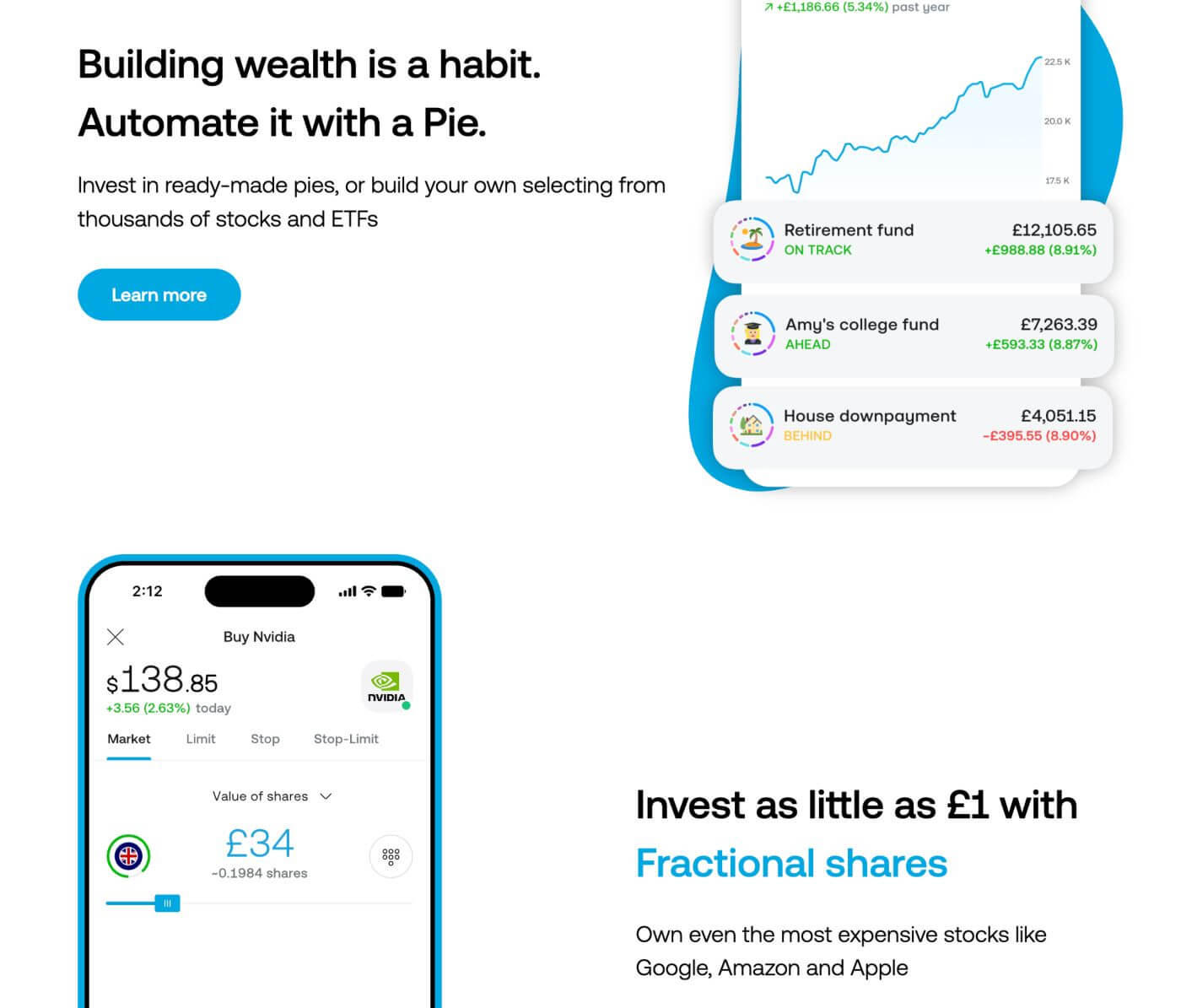
Trading 212’s Invest account lets you buy fractional shares, meaning you can invest in high-priced stocks like Amazon or Tesla without needing to purchase a full share.
This feature allows you to start investing with as little as £1, making it far more accessible for beginners or those looking to diversify with a small budget. It’s a simple, flexible way to get exposure to big-name companies without breaking the bank.
A tax-free investing account for UK residents, allowing them to invest up to £20,000 per year without paying capital gains tax.
We often suggest a Stocks and Shares ISA with Trading 212 because it is one of the most tax-efficient ways to invest. Capital gains, dividends and interest earned inside the ISA are free of UK tax, which compounds into a meaningful difference over the long term.
Tax treatment depends on your individual circumstances and ISA rules can change. If you are weighing providers, our guide to the best stocks and shares ISAs compares the main UK options side by side.
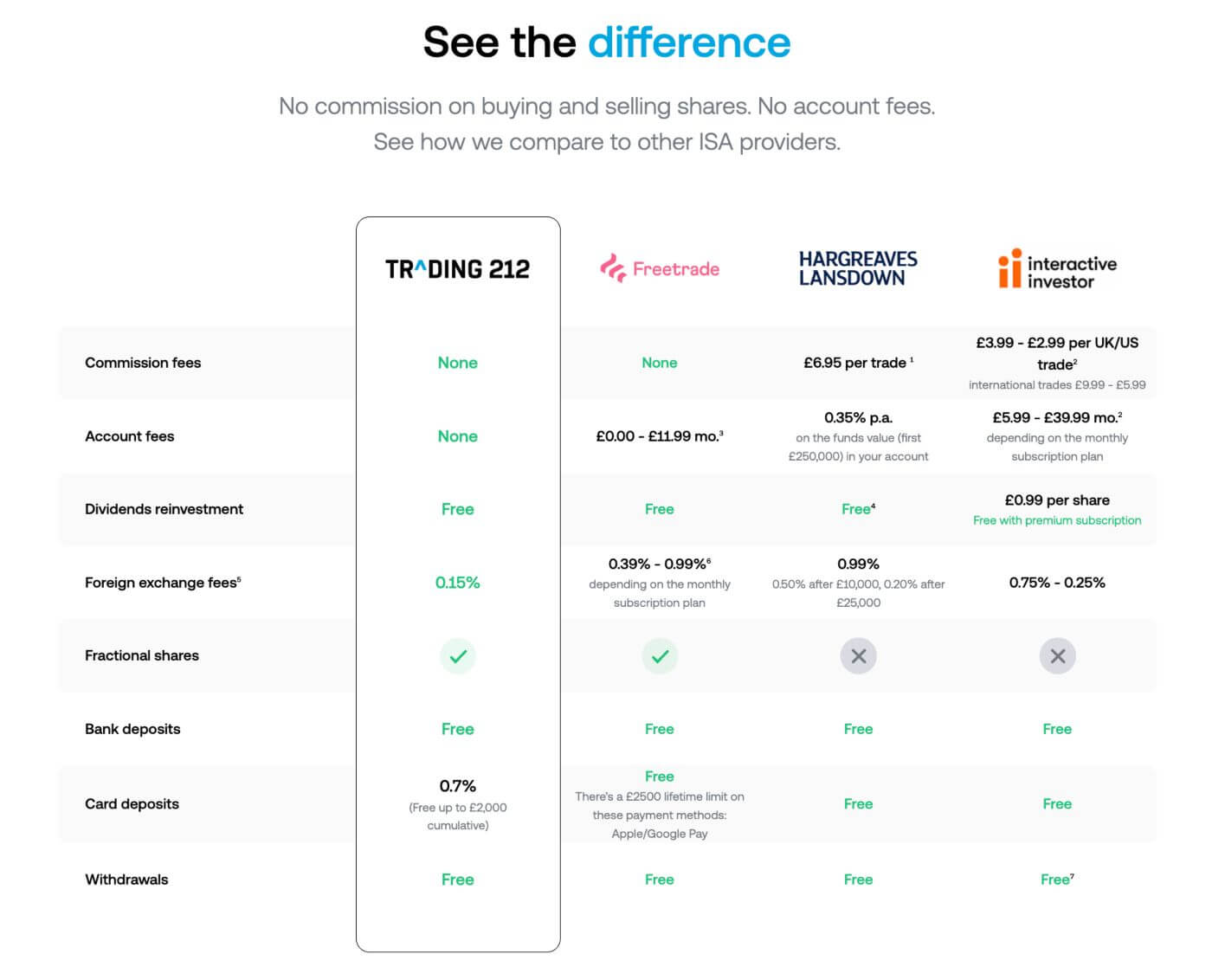
The comparison below was captured in August 2026, so confirm current terms directly with each provider before you decide.
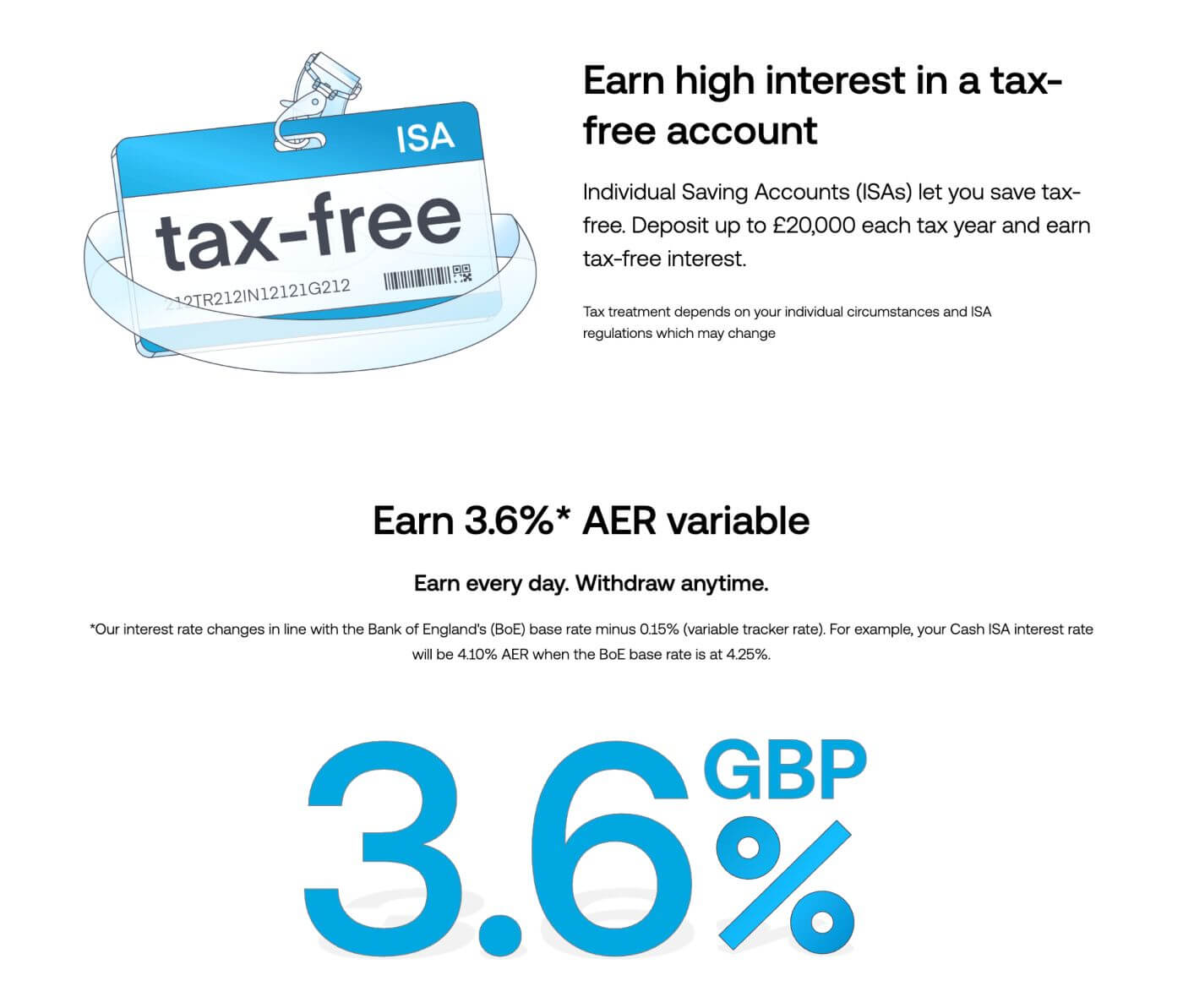
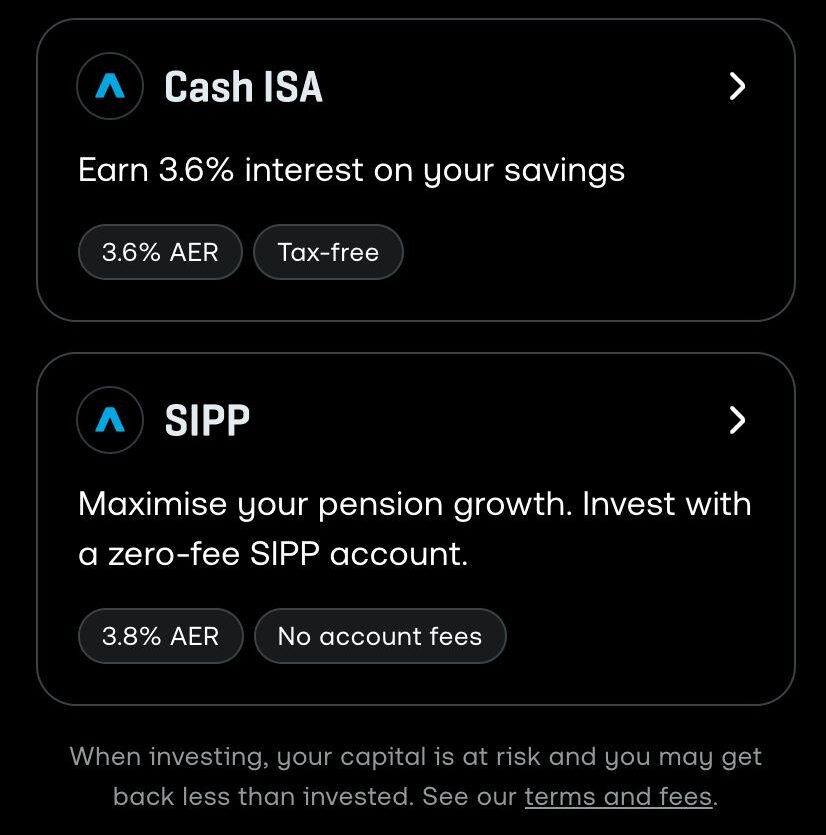
Trading 212’s Cash ISA gives UK savers a straightforward, tax-free way to earn interest with no account fees.
The rate is 3.6% AER variable on GBP as of 5 August 2026, and it is more predictable than most because Trading 212 publishes the formula behind it: the rate tracks the Bank of England base rate minus 0.15%. Trading 212’s own worked example is that a 4.25% base rate produces 4.10% AER. That lets you work out in advance roughly what a base rate move does to your return, which most cash ISA providers do not commit to.
The terms are simple. There is no minimum or maximum balance and one rate applies to every balance, interest accrues daily and is paid monthly, and withdrawals are unlimited and do not affect the rate you earn. Transfers in from other ISA providers are accepted, money can be moved between your Trading 212 wrappers, and it is a flexible ISA, so money you withdraw and replace within the same tax year does not eat further into your allowance. You can pay in up to the £20,000 annual ISA allowance across your ISAs.
Cash held with Trading 212’s partner banks is covered by the FSCS up to £120,000 per person per bank, a limit that rose from £85,000 on 1 December 2025. That limit counts all money you hold at that bank, not only the money Trading 212 placed there.
It will not match the long-term growth potential of a Stocks and Shares ISA, so it suits short-term savings and emergency funds rather than money you can afford to leave invested for years. Cash ISA rates and terms verified against Trading 212’s own Cash ISA page on 5 August 2026.
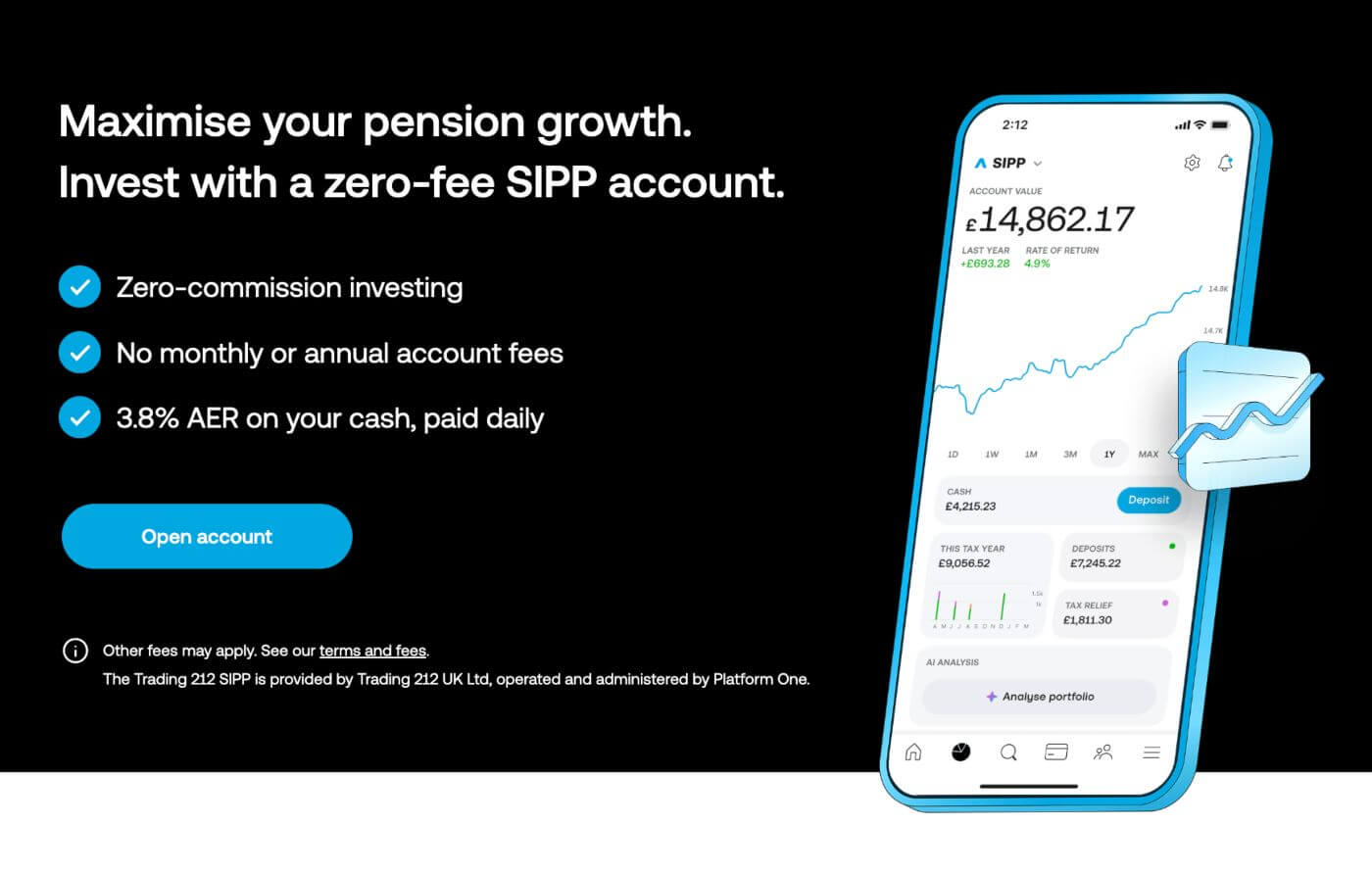
Trading 212 received FCA authorisation to offer self-invested personal pensions in February 2026, and the SIPP is now live. It is being rolled out gradually rather than opened to every client at once, so availability at any given moment depends on where you sit in the queue.
The SIPP is provided by Trading 212 UK Ltd and is operated and administered by Platform One. That is worth stating plainly, because several third-party reviews name Gaudi as the operator. Gaudi went into administration in 2023, so those reviews are wrong.
On cost, the structure follows the rest of the platform. There is no platform fee, no dealing commission and no withdrawal fee, and the minimum deposit is £1. The 0.15% FX fee applies to investments priced in currencies other than GBP, which in practice means most US-listed holdings. Uninvested cash in the SIPP earned 3.8% AER on GBP, paid daily, as of 5 August 2026.
The tax treatment is the standard UK pension one: 25% tax relief is added to contributions, so £80 paid in becomes £100, within an annual allowance of up to £60,000. Transfers in are free, and Trading 212 supports both cash and in-specie transfers, so you do not have to sell existing holdings to move them across. There is also a 30-day cancellation window from your first deposit.
The investment range is the same as everywhere else on the platform: stocks and ETFs only, with fractional shares and multi-currency support. If you would rather not pick holdings yourself, there are three ready-made pies, Vanguard Global, BlackRock Core and WisdomTree Core. This is an execution-only service, so Trading 212 does not give advice and every investment decision remains yours.
The gap to be aware of is drawdown. As of mid 2026 there is no drawdown product, so a client who reaches retirement and wants to take an income from the pension would need to transfer it out to another provider first. Trading 212’s SIPP page covers contributions, transfers and tax relief, but does not advertise a drawdown facility. If you have a long accumulation phase ahead, that may not matter. If you are within a few years of drawing on the pension, it matters a great deal. Our guide to the best SIPP providers covers platforms that do offer drawdown today.
On protection, Trading 212’s SIPP page cites FSCS cover up to £120,000. That is the deposit limit, and it applies to cash held with its partner banks. Claims relating to investments are covered separately and remain capped at £85,000. SIPP holdings are held at Interactive Brokers in segregated accounts.
SIPP details verified against Trading 212’s own SIPP page on 5 August 2026.
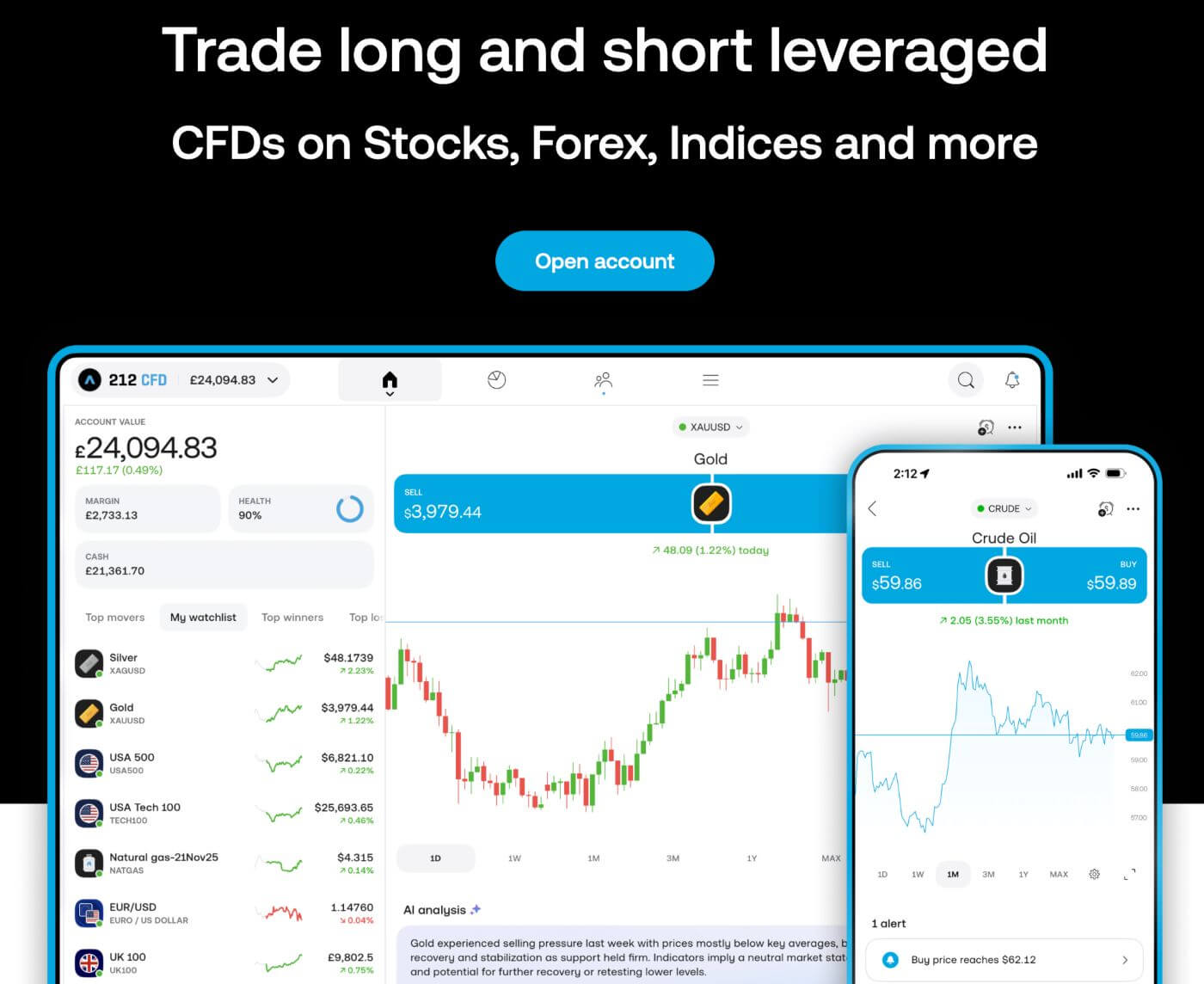
The Trading 212 CFD account lets you trade Contracts for Difference on stocks, forex, indices, and commodities with leverage. This means you can speculate on price movements (up or down) without owning the underlying asset, using only a fraction of the full trade value.
While this can amplify profits, it also increases risk of losing capital tremendously.
Trading 212’s own risk disclosure, checked on 5 August 2026, reads: “CFDs are complex instruments and come with a high risk of losing money rapidly due to leverage. 77% of retail investor accounts lose money when trading CFDs with this provider. You should consider whether you understand how CFDs work and whether you can afford to take the high risk of losing your money.”
When selecting an investment style, it’s crucial to consider factors such as financial goals, risk tolerance, and the type of account that would suit that best.
The diverse service offering of Trading 212 gives investors the flexibility to align their investments with their unique objectives and values.
Uninvested cash can earn interest across all account types, paid daily, with no minimum or maximum balance and no penalty for withdrawing. It is not switched on automatically, so you have to enable it yourself.
Rates are variable and track central bank rates. Trading 212’s card page displayed 3.8% AER on GBP as of 5 August 2026 for cash in an Invest account. The Cash ISA is a separate product on a separate rate, 3.6% AER variable on the same date, so do not assume the two move together even though both are variable.
There is a trade-off attached to switching it on. To pay interest, Trading 212 holds your cash in qualifying money market funds as well as with partner banks. Money in a qualifying money market fund is treated as an investment rather than a bank deposit, so FSCS deposit protection does not apply to that portion. Cash held only with the partner banks keeps the £120,000 deposit protection. For most people that is a reasonable trade, but it should be a conscious choice rather than a surprise.
Trading 212 does not offer direct cryptocurrency purchase to UK clients. You cannot buy Bitcoin itself on the platform.
What is available is crypto exchange traded notes, or ETNs, after the FCA lifted its ban on selling them to retail investors in October 2025. Crypto ETNs are classified as Restricted Mass Market Investments, so access is deliberately slow. You must make a Restricted Investor declaration confirming you will not put more than 10% of your net assets into high-risk investments, pass a knowledge and experience test, wait out a 24-hour cooling-off period, and then give a final confirmation.
There is also an ISA restriction. From 6 April 2026, new crypto ETN purchases are not permitted inside a Stocks and Shares ISA. Holdings bought on or before 5 April 2026 can be held or sold, but not added to.
One piece of context most reviews leave out. The Financial Times reported that Trading 212 offered crypto ETNs to UK retail clients between October 2025 and January 2026 before it held the relevant permission. The firm applied for that permission after being contacted by its FCA supervisors and was granted it in January 2026. We include it because it is relevant to judging the firm, not because it changes the current position: the permission is in place now.
Build a portfolio as a Pie, set target weightings, then fund it on a recurring schedule with AutoInvest. Contributions are allocated automatically and the portfolio can be rebalanced back to your chosen weightings, which makes regular investing simple to maintain.
Uninvested cash in the Invest and ISA accounts can earn interest, paid daily, with no minimum or maximum balance and no penalty for withdrawing. It must be enabled manually, and the account supports 12 global currencies. Rates are variable and track central bank rates.
Trading 212 offers 24/5 trading on popular US stocks and ETFs with fractional shares, from Sunday 22:00 to Friday 21:00 UK time. This extended access gives you more flexibility to react to global events and news as they unfold.
Share lending is opt-in and switched off by default. Net lending revenue is split 50/50 between Trading 212 and you, loans are collateralised, and lending does not restrict your trading: you can still close, modify or add to a position while shares are on loan. Two trade-offs matter. Dividends arrive as manufactured payments, which can be taxed differently from ordinary dividends, and voting rights pass to the borrower while shares are lent. Trading 212 states that only Invest accounts are eligible.
The 212 Card is now positioned as a zero-FX travel and spending card rather than a cashback card. There is no FX fee on card transactions, which settle at the interbank rate with no spread markup, you can spend in 176 currencies, and there is no monthly subscription. ATM withdrawals are free up to £400 per month, with a 1% fee after that. The card is issued by Paynetics UK Limited under its FCA-authorised e-money licence. Paynetics does not hold your cash: funds stay in your Invest account and keep the same protections.
These features are designed to provide a comprehensive investing experience, meeting the needs of all types of retail clients, from conservative investors and savers to more active traders.
Through its range of accounts and services, Trading 212 seems to promise to continue innovating and adapting to the preferences of modern investors.
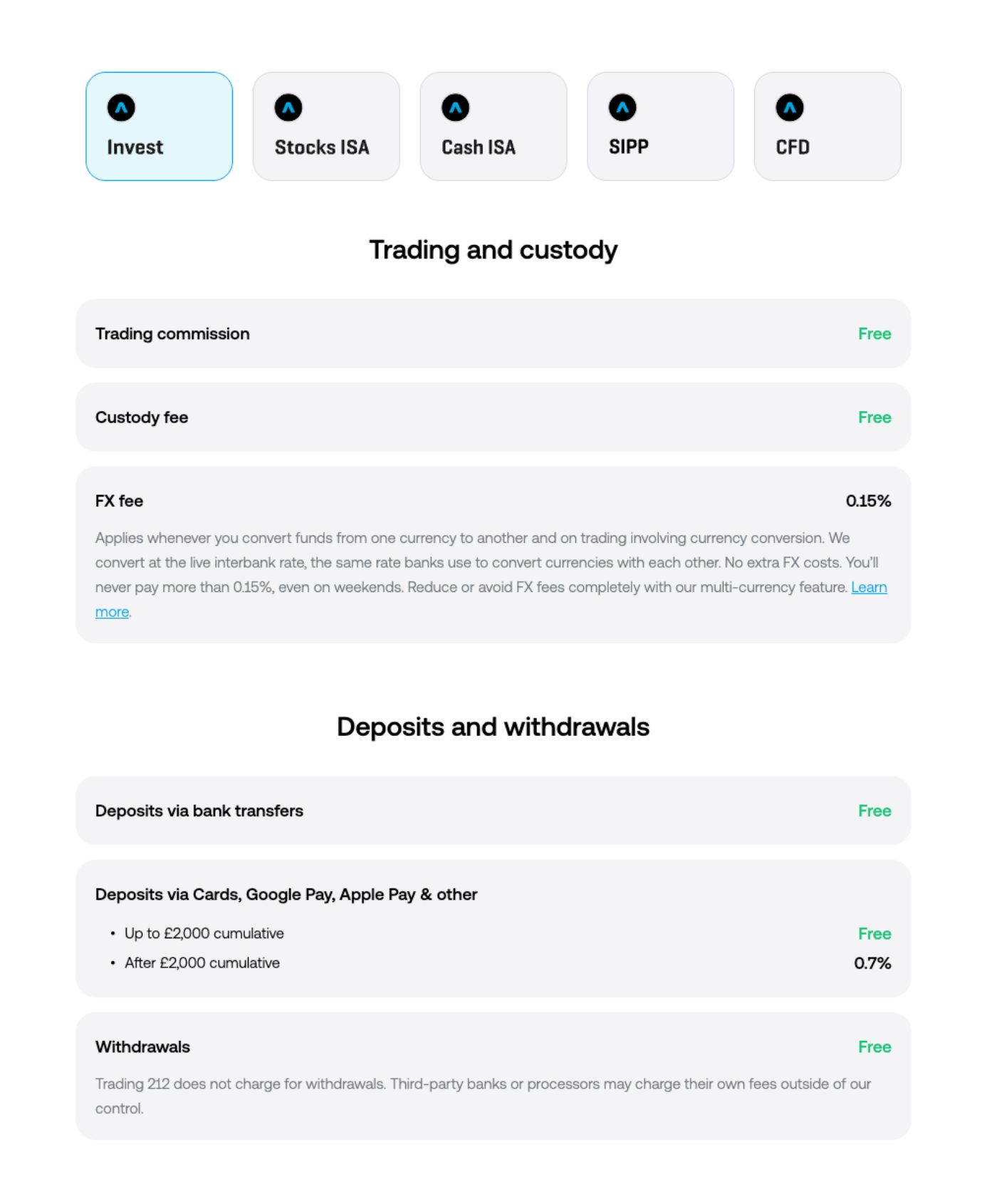
Trading 212 charges no commission on stock and ETF dealing, no platform or custody fee and no inactivity fee. The minimum investment is £1, and portfolio transfers in and out are free.
The main cost to watch is currency conversion. A 0.15% FX fee applies when you convert funds in the app, which affects anything you buy that is not priced in GBP. Card spending is treated differently: 212 Card transactions carry a 0% FX fee at the interbank rate with no spread markup, and ATM withdrawals are free up to £400 per month with a 1% fee after that.
If you want to see how that compares with other UK platforms at your portfolio size, our UK broker fees calculator works out the annual cost across the main providers.
The fee structure for CFDs is different; while there is no commission on trades, Trading 212 generates revenue through spreads and overnight fees. The spread is the difference between the buy and sell price of an asset.
Overnight fees or swaps are charged when a leveraged position is held open after a certain time, reflecting the cost of the leverage provided.
For more detailed information, you can view the specific terms on the broker’s website:
Trading 212 is regulated by multiple authorities to ensure compliance, transparency, and security for its users:
The entity UK retail clients contract with. Registered in England and Wales and authorised and regulated by the Financial Conduct Authority (FCA) under firm reference number 609146. If you are in the UK, this is the entity that holds your account and the FCA is your regulator.
Registered in Cyprus (HE 409763) and authorised and regulated by the Cyprus Securities and Exchange Commission (CySEC) under licence number 398/21. This entity serves clients in certain non-UK, non-EU regions.
Registered in Germany and authorised and regulated by the German Federal Financial Supervisory Authority (BaFin) under licence number 10109603. This entity serves clients in the EU, not the UK.
Registered in Australia (ABN 46 660 342 763) and regulated by the Australian Securities and Investments Commission (ASIC) under AFSL 541122. This entity serves clients in Australia.
Client money and client assets are held under the FCA’s client asset rules: CASS 6 covers safe custody of investments and CASS 7 covers segregation of client money.
Invest account holdings sit with Trading 212’s appointed custody partners, Interactive Brokers and Bank of New York Mellon, in segregated accounts kept separate from Trading 212’s own assets. Trading 212 reconciles its records with the custodians daily, and an external firm, Buzzacott, reviews its asset protection processes annually.
Two separate FSCS limits apply, and it is worth understanding the difference between them.
Offers zero commissions on stock and ETF trades, making investing more accessible.
Invest, Stocks and Shares ISA, Cash ISA, SIPP and a separate CFD account, covering general investing, tax wrappers, cash savings and retirement in one app.
Provides a comprehensive learning hub to help both new and experienced investors.
Diversifies and automates investments, enabling users to leverage pound-cost averaging.
Allows investment in smaller portions of expensive stocks, making it easier to diversify your portfolio.
Facilitates easy access to funds, blending investing with daily financial transactions.
Start your investing journey with Trading 212 today!
Trading 212 is low cost and FCA regulated, but no platform suits everyone. These are the limits worth weighing before you open an account.
Trading 212 offers stocks and ETFs only. There are no mutual funds, unit trusts or OEICs, and no direct bond dealing, so a traditional fund-based portfolio is not possible here.
While the CFD account is clearly separated from other accounts, it is available and comes with higher risks due to leverage, which might not be suitable for beginner investors who start on the platform.
Trading 212’s SIPP launched in 2026 without a drawdown option, so anyone who wants to start taking a retirement income would currently need to transfer the pension out to another provider.
While the app is user-friendly, it lacks the in-depth market analysis, screeners, and professional-grade tools that more advanced investors might want.
Customer support is generally well rated and chat is available 24/7, but capacity has been stretched during periods of high market volatility when contact volumes spike.
In January 2021 Trading 212 restricted buy orders on GameStop and several other stocks during extreme volatility. The episode later produced Financial Ombudsman Service decisions and remains relevant context when judging the platform.
Two smaller points are also worth knowing. The 0.15% FX fee applies whenever you buy something not priced in pounds, so regular buyers of US shares pay it on every purchase. And switching on interest means part of your cash may be held in qualifying money market funds, which count as investments rather than bank deposits, so the £120,000 FSCS deposit protection does not apply to that portion.
If any of these rules Trading 212 out for you, the alternatives below or our Find My Broker quiz can point you to a better fit.
Trading 212 is likely to suit you if you:
You may be better served elsewhere if you:
Via the contact form on the broker’s website or with a direct email at info@trading212.com.
Accessible via the Trading 212 mobile and web apps 24/7.
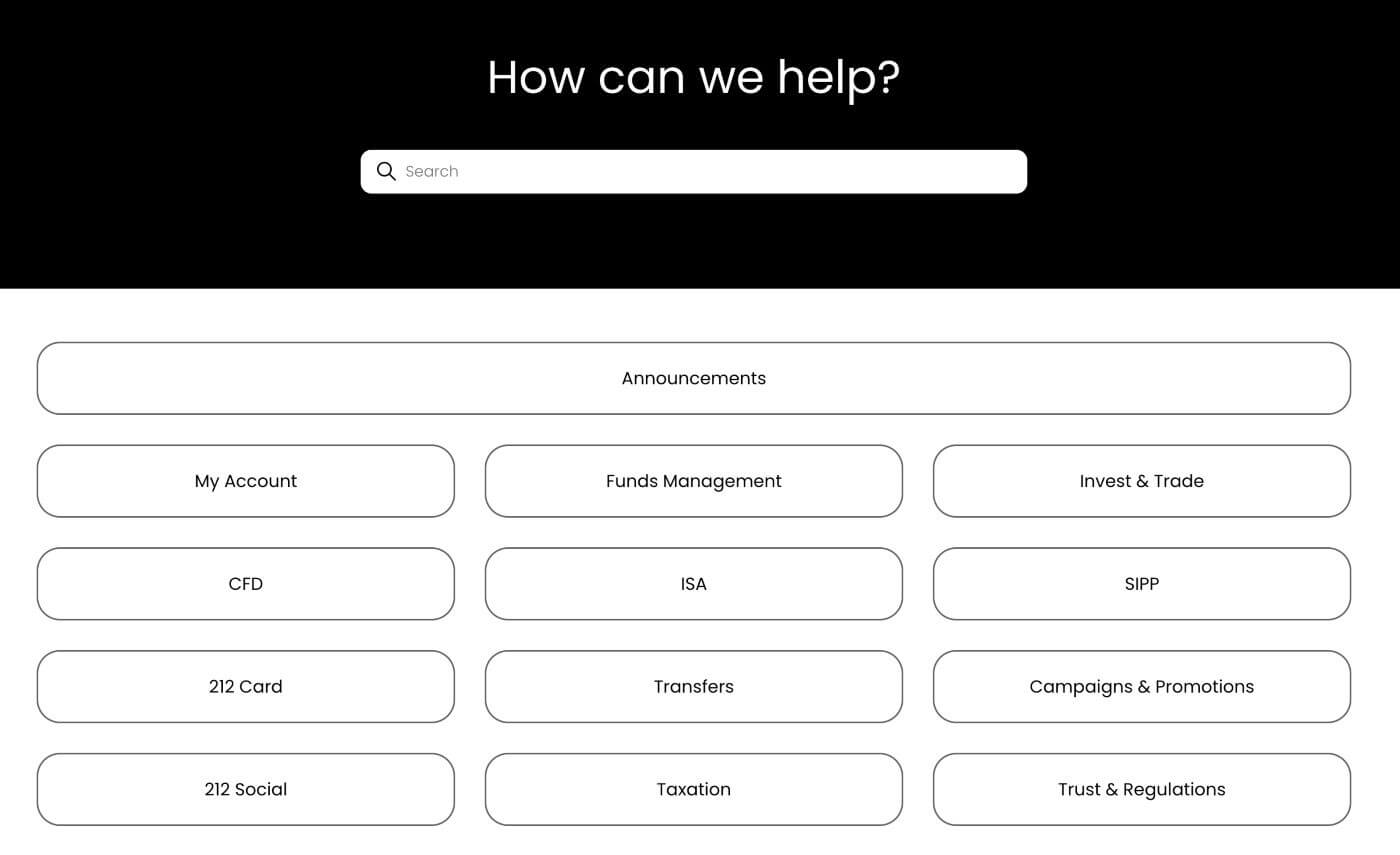
A FAQ-type hub that includes all the important details for the platform’s features and services, plus additional useful articles.
Here, users can read and discuss different topics with each other. There are a lot of platform news updates and direct contact with the T212 staff on mass client questions.
Our examination of the available customer service shows that customer satisfaction is a top priority. They’ve strategically trained an AI chatbot that assists clients upon starting a chat with basic questions and a real human ready to take over any time upon client request.
Setting up an account with Trading 212 is a straightforward process designed to be quick and efficient.
First, you choose the account you want to open: Invest, Stocks and Shares ISA, Cash ISA, SIPP or a CFD account. You can hold more than one, and money can be moved between the Trading 212 wrappers.
In addition to the standard account setup, those interested in the CFD account must complete a Knowledge and Experience Questionnaire. This is an important step to ensure that the user understands the risks associated with trading Contracts for Difference (CFDs) and is adequately prepared for this type of trading.
The questionnaire assesses the applicant’s trading experience, knowledge of financial instruments, and understanding of the risks involved in CFD trading.
The information provided on this page and throughout the website is for general information purposes only and does not constitute financial advice. It is important that you conduct your own research and consider your own personal circumstances before making any investment decisions.
The minimum deposits for each account type are as follows:
Trading 212 keeps things accessible with a low minimum: just £1 for the Invest and ISA accounts if you fund by bank transfer, Apple Pay, Google Pay or a linked UK bank account.
If you deposit by debit or credit card or another method, a minimum of £10 applies. It is also worth noting that after your first £2,000 in card or e-wallet deposits, a 0.7% fee applies to further top-ups by those methods.
Getting started is cheap, but it pays to plan how you fund the account so you avoid unnecessary charges.
Trading 212 is hard to beat on cost, but it does not suit everyone. If you want funds and research, a managed portfolio, ready-made funds or social features, these are the alternatives we would look at first.

Best for social investing
eToro
A multi-asset platform with social features, including CopyTrader if you want to follow other investors’ portfolios.
eToro is a multi-asset investment platform. The value of your investments may go up or down. Your capital is at risk.

Best for low-cost ETF portfolios
InvestEngine
No platform fee on DIY ETF portfolios, plus ready-made managed portfolios if you would rather have help.
Capital at risk.

Best for funds and research
Hargreaves Lansdown
A wide range of funds and bonds alongside shares, plus in-depth research, the areas where Trading 212 is most limited.
Capital at risk.
Best for ready-made funds
Vanguard
Vanguard’s own LifeStrategy and target retirement funds in an ISA, SIPP or Junior ISA, from one of the world’s largest fund managers.
Capital at risk.
For experienced investors
Interactive Brokers
Access to markets worldwide and advanced trading tools, better suited to confident, hands-on investors.
Capital at risk.

Best if you want it managed for you
J.P. Morgan Personal Investing (Nutmeg)
Fully managed portfolios from £500, with a 14-year published track record across ten risk levels.
Capital at risk.
Every platform here is authorised by the FCA. To weigh them up side by side, see our platform comparisons, or answer a few questions in our Find My Broker quiz.
And make sure to check out our reviewed brokers!
UK clients contract with Trading 212 UK Ltd, which is registered in England and Wales and is authorised and regulated by the Financial Conduct Authority under firm reference number 609146. Other Trading 212 entities are authorised by CySEC, BaFin and ASIC, but those serve other regions and are not your counterparty in the UK.
Investments are held in segregated accounts by Interactive Brokers and Bank of New York Mellon under the FCA’s CASS 6 and CASS 7 rules, and an external firm, Buzzacott, audits the asset protection processes annually.
Yes, but two different limits apply and it is worth knowing which is which.
If you enable interest on cash, you consent to your cash being held in qualifying money market funds. Money held that way counts as an investment, so bank deposit protection does not apply to it.
Yes. Trading 212 received FCA authorisation to offer self-invested personal pensions in February 2026 and the SIPP is now live, rolling out gradually through a waitlist rather than being open to everyone at once.
The SIPP is provided by Trading 212 UK Ltd and is operated and administered by Platform One. Several third-party reviews name Gaudi as the operator, which is incorrect: Gaudi went into administration in 2023.
On cost there is no platform fee, no dealing charge and no trustee fee, with the 0.15% FX fee applying to non-GBP investments. The significant gap is that there is no drawdown product as of mid 2026, so anyone wanting to take an income from the pension would need to transfer out. You can compare it with other options in our best SIPP providers guide.
Not directly. Trading 212 does not offer direct cryptocurrency purchase to UK clients.
Crypto exchange traded notes (ETNs) are available after the FCA lifted its retail ban in October 2025. These are classified as Restricted Mass Market Investments, so access requires a Restricted Investor declaration confirming you will not put more than 10% of your net assets into high-risk investments, a knowledge and experience test, a 24-hour cooling-off period and a final confirmation.
From 6 April 2026, new crypto ETN purchases are not permitted inside a Stocks and Shares ISA. Holdings bought on or before 5 April 2026 can be kept or sold but not added to.
No. Trading 212 offers stocks and ETFs only. There are no mutual funds, unit trusts or OEICs, and there is no direct bond dealing.
For many investors an ETF does the same job as a tracker fund at a similar or lower cost, but if you want a specific actively managed fund or an OEIC held elsewhere, Trading 212 is not the right platform for it.
0.15% when you convert currency in the app, which is what applies when you buy an investment priced in something other than GBP.
212 Card transactions are different: they carry a 0% FX fee at the interbank rate with no spread markup. ATM withdrawals are free up to £400 per month, with a 1% fee after that.
For straightforward stock and ETF investing, yes. The app is intuitive, dealing is commission-free, fractional shares start at £1 and there is a free demo account with virtual funds to practise on.
The CFD account is a different matter. Trading 212’s own disclosure states that 77% of retail investor accounts lose money when trading CFDs with the provider, so it is not a sensible starting point.
It can, but the platform does not decide your returns. What you earn depends on what you invest in, how long you stay invested and how markets perform, and the value of investments can fall as well as rise, so you may get back less than you put in. What Trading 212 does influence is cost: with no commission or platform fee, more of your money stays invested, which adds up over long periods.
Its separate CFD account is a different product. Trading 212’s own risk warning, checked on 5 August 2026, says 77% of retail investor accounts lose money when trading CFDs with this provider.
Fees verified against Trading 212’s own published pages on 5 August 2026. You can model the total cost against other platforms with our UK broker fees calculator.
£1 for the Invest, Stocks and Shares ISA, Cash ISA and SIPP accounts when funding by bank transfer, Apple Pay, Google Pay or a linked UK bank account. £10 applies for the CFD account and for card or e-wallet deposits.
Yes. Interest is paid daily, with no minimum or maximum balance, and you can withdraw at any time without penalty. It is available on all account types but has to be enabled manually.
Rates are variable and track central bank rates. Trading 212’s card page showed 3.8% AER on GBP as of 5 August 2026 for cash held in an Invest account. The Cash ISA runs on its own rate, 3.6% AER variable on the same date, which tracks the Bank of England base rate minus 0.15%. Check the live figures before acting on them.
Enabling interest means consenting to your cash being held in qualifying money market funds, which are treated as investments rather than bank deposits for compensation purposes.
Yes. You can buy fractional shares from as little as £1, which makes high-priced stocks accessible without buying a whole share. Fractional dealing also works during the 24/5 extended hours session on popular US stocks and ETFs.
Deposits can be made by bank transfer, debit or credit card, or services such as Apple Pay and Google Pay. Withdrawals are free, usually processed within 1 to 3 business days, and must go back to a funding source in your own name.
After your first £2,000 in card or e-wallet deposits, a 0.7% fee applies to further top-ups by those methods. Bank transfer avoids this.
Trading 212 has grown into one of the most complete low-cost investment platforms available to UK retail investors. Commission-free dealing on stocks and ETFs, no platform or custody fee, no inactivity fee, a £1 minimum and free portfolio transfers make it genuinely cheap to run.
The account range is now much broader than it was. Alongside the Invest account and the Stocks and Shares ISA there is a Cash ISA and, since February 2026, a SIPP. Fractional shares, Pies and AutoInvest, 24/5 trading on popular US stocks and the zero-FX 212 Card round out a proposition that is unusually wide for the price.
UK clients contract with Trading 212 UK Ltd, authorised and regulated by the FCA under firm reference number 609146. Uninvested cash held with partner banks carries FSCS deposit protection up to £120,000 per person per bank, while FSCS investment protection remains £85,000. Investments are held in segregated accounts by Interactive Brokers and Bank of New York Mellon under the FCA’s CASS 6 and CASS 7 rules.
The limitations are real and worth weighing. There are no mutual funds, unit trusts or OEICs and no direct bond dealing, so a traditional fund portfolio is not possible here. The SIPP has no drawdown option yet, which means taking a retirement income would require transferring out. Customer support capacity has been stretched during periods of high market volatility, and the January 2021 GameStop buy-order restrictions later produced Financial Ombudsman Service decisions.
On balance, Trading 212 suits cost-conscious investors who want stocks and ETFs inside a tax wrapper and are comfortable with a mobile-first, self-directed platform. If you need funds, bonds, drawdown or deep research tooling, compare it against the alternatives first. Our guide to the best SIPP providers is a good starting point for pensions, and the Find My Broker quiz will narrow the field in a couple of minutes.
Don't forget to visit our Knowledge Hub for more useful information on all things personal finance
vs
Trading 212 vs Vanguard
Zero platform fees and individual shares against a capped account fee and single fund index portfolios. The crossover sits around £32,000 invested.
Read the full comparison →
vs
Trading 212 vs InvestEngine
Neither charges a platform fee or dealing commission, so the decision comes down to currency costs and whether you want individual shares at all.
Read the full comparison →
vs
Trading 212 vs eToro
Both charge 0% commission, so the FX fee decides it: 0.15% at Trading 212 against 0.70% at eToro, with a SIPP on one side and funds and bonds on the other.
Read the full comparison →
vs
Trading 212 vs XTB
Both charge 0% commission with free ISAs, so the FX fee, cash interest and the SIPP decide it: 0.15% FX at Trading 212 against 0.5% at XTB.
Read the full comparison →
This review follows the same process we apply to every broker, so you can see what the verdict above is actually based on.
When investing, your capital is at risk and you may get back less than you invested. Past performance does not guarantee future results. Tax treatment depends on your individual circumstances, and ISA and pension rules can change.
CFDs are complex instruments and come with a high risk of losing money rapidly due to leverage. 77% of retail investor accounts lose money when trading CFDs with this provider.
This review is general information, not financial advice, and it does not take account of your personal circumstances. Consider seeking regulated advice if you are unsure what is right for you.
Disclaimer
The information provided on this page and throughout the website is for general information purposes only and does not constitute financial advice. It is important that you conduct your own research and consider your own personal circumstances before making any investment decisions.
While we strive to provide accurate product information at the time of publication, the information may be subject to change by the provider at any time. Please always verify the product information before making any decisions. Past results do not guarantee future profits.
If you use some of the links on Your Wallet Manager, we may receive a small fee from our partners, supporting the website’s free usage. However, please be assured that our editorial content is never influenced by these links. We include them to help us keep the lights on and to support our mission of helping people make informed financial decisions regarding their wallet’s most important spendings.
Thank you for your understanding and support!
Adding {{itemName}} to cart
Added {{itemName}} to cart