













What’s the Inflation Rate in the UK for 2024?

Introduction
As of April 2024, the UK’s inflation rate is recorded at 2.3%. But what is inflation?
It is a critical economic indicator that reflects the rate at which the general level of prices for goods and services is rising, thereby eroding purchasing power. This measure is pivotal for both macroeconomic management and personal financial planning, as it affects everything from interest rates set by the Bank of England to the cost of living for individuals.
By understanding the nuances of the current rate, readers can make more informed decisions related to investments, savings, and everyday spending in an economically volatile environment.
The information provided on this page and throughout the website is for general information purposes only and does not constitute financial advice. It is important that you conduct your own research and consider your own personal circumstances before making any investment decisions.
Current Rate of Inflation
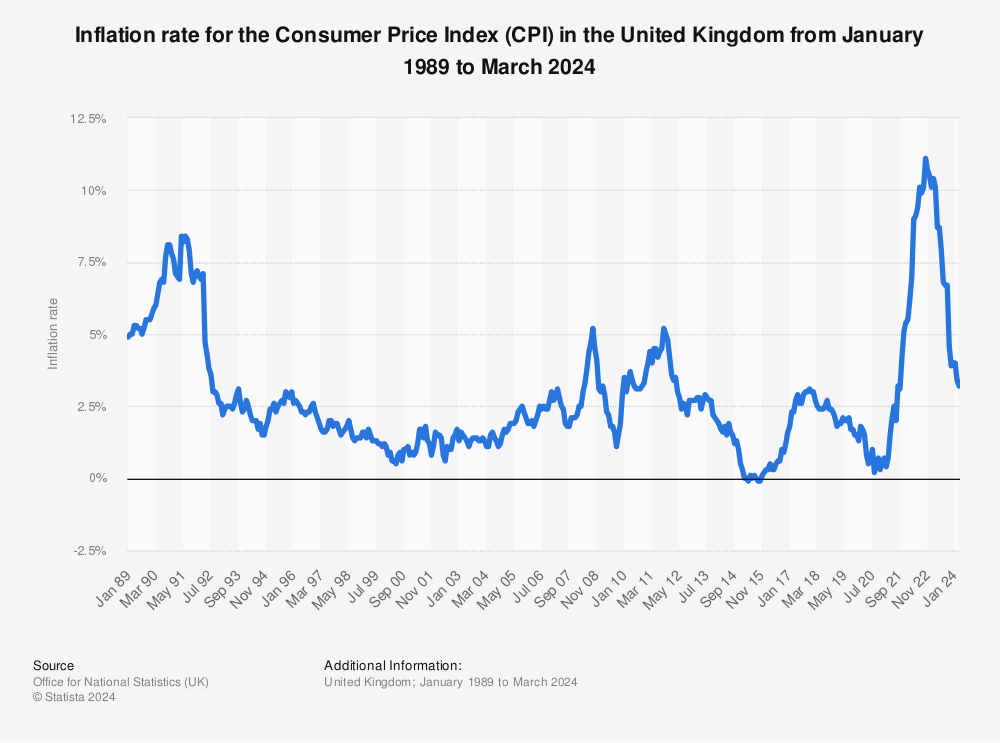
As of April 2024, the UK’s Consumer Price Index (CPI) inflation rate is recorded at 2.3%. This figure is critical as it provides a snapshot of the economic environment, illustrating the rate at which the general price level of goods and services is increasing and affecting consumer purchasing power.
The significance of this rate is multifaceted, particularly when compared to previous forecasts and historical data. Notably lower than expected, it represents a decrease from earlier predictions, which had anticipated a higher inflationary trend.
Historically, it also marks one of the more moderate inflation rates, indicating a period of relative price stability and potential shifts in economic policy and consumer behavior.
Factors Influencing the 2024 Inflation Rate
Changes in commodity prices and international trade tensions are pivotal, influencing costs of imports and exports.
The UK government's fiscal policies and the Bank of England's interest rate adjustments directly impact economic liquidity and spending.
Geopolitical conflicts and supply chain disruptions contribute to short-term price volatility across various markets.
Sector-Specific Impacts
Fluctuations in global commodity prices and trade policies have led to variable food pricing, affecting consumer costs.
Interest rate changes and housing policies influence mortgage rates and construction costs, altering housing market dynamics.
International oil and gas market fluctuations, alongside environmental policies, heavily affect energy prices, impacting both consumer and industrial sectors.
Comparison with Core Inflation and RPI
The Consumer Price Index (CPI) of 2.3% provides a broad measure of inflation across all consumer goods and services in the UK. In contrast, the core rate, which excludes volatile items such as food and fuel, stands at 3.9%, offering a different perspective by focusing on the less fluctuating components of the economy. This rate suggests underlying inflationary pressures that are less susceptible to immediate market changes.

Additionally, the Retail Price Index (RPI), which includes mortgage interest payments and is historically higher, is reported at 3.3%. The RPI offers a more comprehensive view of the cost pressures faced by consumers, as it encompasses a wider range of expenses, illustrating a different dimension of the economic environment. Comparing these metrics helps illustrate the nuanced picture of price stability and inflationary trends in the UK.

Source: Consumer price inflation time series
Government and Bank of England's Role
In response to the current inflation trends, the UK government and the Bank of England have implemented several strategic actions.

The Bank of England, in particular, has adjusted interest rates as a direct response to manage the economic impact. These adjustments are part of a broader monetary policy aimed at stabilizing prices and controlling inflation levels. Additionally, other fiscal measures and economic policies have been introduced to support these efforts, ensuring that the rate does not undermine economic growth or consumer purchasing power.
Impact on Consumers and Businesses
The current rate in the UK significantly impacts both households and businesses, affecting their purchasing power and financial planning.
For consumers, even moderate inflation can erode purchasing power, leading to a higher cost of living and stagnating real wage growth.
This scenario often forces households to adjust their spending habits, particularly in essential sectors like food and housing, which are more sensitive to price changes. Businesses face similar challenges, as rising costs can squeeze margins, necessitating price adjustments to maintain profitability.
Moreover, this also influences savings and investment behaviors. With the current level, savers find it increasingly difficult to find returns that can outpace inflation, potentially leading to reduced savings rates.
For investors, inflation can distort the real returns on investments, influencing decisions in asset allocation and risk assessment. The broader economic implications include potential shifts in consumer spending and investment patterns, which can ultimately affect overall economic growth and stability.
These dynamics highlight the interconnectedness of various facets of the economy and underscore the importance of effective monetary policies to manage inflationary pressures.
Predictions for Future Inflation Trends
Experts anticipate that UK inflation rates could see varied trends based on several influencing factors:
Economic Recovery and Growth
As the UK continues to recover from past economic disruptions, inflation could be impacted by the pace of growth and recovery dynamics.
Monetary Policy Adjustments
The Bank of England's future decisions on interest rates will play a critical role. With current rates aimed at curbing inflation, any further adjustments will directly influence its trends.
Global Market Trends
Ongoing global uncertainties, including trade relations and commodity prices, are likely to also have an effect. For instance, increases in global oil prices could lead to higher inflation.
These predictions suggest a cautious approach to inflation management, highlighting the need for adaptive economic policies that can respond effectively to both domestic and international changes.
Additionally, demographic shifts and technological advancements could also play significant roles. An aging population might affect labor market dynamics and productivity, potentially leading to inflationary pressures or deflationary effects depending on the balance of consumption and workforce participation.

Moreover, technological innovations might lead to cost reductions in various sectors, counterbalancing inflationary trends in others.
This complex interplay of factors necessitates vigilant monitoring and flexible policy frameworks to manage the potential impacts effectively.
Conclusion
Throughout 2024, the UK’s average inflation rate of 2.3% has provided a nuanced view of economic stability and change. This rate, influenced by global and domestic factors, suggests a balancing act between economic recovery and persistent uncertainties that could shape future inflationary trends.
The ongoing adjustments in monetary policy and external economic pressures may have profound long-term impacts on the UK economy, potentially affecting everything from consumer purchasing power to business planning and investment strategies.
To navigate this inflationary landscape effectively, it’s crucial for consumers and businesses to stay informed about inflation trends and adapt their financial planning accordingly. Regularly consulting reliable economic forecasts, adjusting budgeting practices, and considering smart investment opportunities can help mitigate the impact.
Be sure to check out YourWalletManager’s Knowledge Hub for more useful articles covering topics that will help you to improve your financial knowledge and overall personal finance!
Staying proactive in financial education and planning is key to managing the challenges of an ever-evolving economic environment.