Lost Pension Pots 2026: How To Find And Claim What Is Yours
[…]

Broker reviews
Choose a UK investing platform
 eToro
eToro Plus500
 Interactive Brokers
 J.P. Morgan
 Vanguard UK
 Trading 212
 AJ Bell
 Trading.com
 Lightyear
 Webull UK
 XTB UK
 Robinhood UK
 Hargreaves Lansdown
 Interactive Investor
 InvestEngine
Every review covers fees, account types, safety and FCA regulation, and is updated as providers change their pricing.
A side by side comparison of the UK's largest investment platform and its best known flat fee rival, covering charges, accounts, investment choice and who each one actually suits.

By David Katzarov, Editor
Published: | Fact-checked by: Dimitar Kanazirski | Last updated:
Percentage fees | ISA, SIPP, LISA and Junior ISA | Very wide investment choice
Capital at risk.
Flat monthly fee | ISA, SIPP and Trading Account | Free regular investing
Capital at risk.
Percentage fees | ISA, SIPP, LISA and Junior ISA | Very wide investment choice
Flat monthly fee | ISA, SIPP and Trading Account | Free regular investing
Hargreaves Lansdown is the UK’s largest direct to consumer investment platform, with more than two million clients and over 45 years of history. It is authorised and regulated by the Financial Conduct Authority under firm reference number 115248. You get a very wide investment range, a well regarded research team and UK based telephone support from Bristol.
Charges are percentage based. The account charge is 0.35% a year on funds up to £250,000, tiering down above that, and 0.35% a year on shares and other equities capped at £12.50 a month. Fund deals cost £1.95 and share deals £6.95, falling to £3.95 if you placed 20 or more trades the previous month. Our full Hargreaves Lansdown review looks at the platform in more depth.
Interactive Investor is the UK’s original flat fee investment platform, now part of Aberdeen. Interactive Investor Services Limited is authorised and regulated by the Financial Conduct Authority under firm reference number 141282. Instead of taking a percentage of your portfolio, it charges a fixed monthly subscription that covers an ISA, a SIPP and a Trading Account together.
There are three plans: Core at £5.99 a month for portfolios up to £100,000, Plus at £14.99 a month with no portfolio limit, and Premium at £39.99 a month for frequent traders. Regular investing is free on every plan. Our full Interactive Investor review covers how the plans work in practice.
| Criteria | Hargreaves Lansdown |
Interactive Investor |
|---|---|---|
| Overall rating | ★★★★★★★★★★4.5 / 5 | ★★★★★★★★★★4.4 / 5 |
| Best for | Smaller portfolios, research and phone support | Larger portfolios and predictable costs |
| Regulator | FCA (Hargreaves Lansdown Asset Management Ltd, FRN 115248) | FCA (Interactive Investor Services Ltd, FRN 141282) |
| Fee model | Percentage of your portfolio | Flat monthly fee |
| Platform fee, funds | 0.35% up to £250,000, then 0.25%, then 0.10% | £5.99 to £39.99 a month depending on plan |
| Platform fee, shares and ETFs | 0.35% a year, capped at £12.50 a month | Included in the monthly plan fee |
| Cheapest plan or tier | No minimum charge | Core, £5.99 a month, up to £100,000 |
| Fund dealing | £1.95 per online trade | £3.99 Core, £1.49 Plus, free on Premium |
| Share dealing | £6.95, or £3.95 after 20+ trades a month | £3.99 UK and US, £2.99 on Premium |
| Regular investing | Free by Direct Debit | Free on every plan |
| Foreign exchange fee | Overseas dealing charges apply, no single headline rate published | 0.75% Core, tiered on Plus, 0.25% Premium |
| Stocks and Shares ISA | Yes | Yes |
| SIPP | Yes | Yes, admin fee included in the plan |
| Lifetime ISA | Yes, 0.25% capped at £3.75 a month | No |
| Junior ISA | Yes, no account or dealing charge | Yes, on Plus and Premium only |
| Cash savings | Cash ISA and Active Savings | Cash savings available |
| Investment choice | Funds, shares, ETFs, investment trusts, bonds, gilts, VCTs | Funds, shares, ETFs, investment trusts, bonds, gilts, VCTs |
| Fund discounts | Over 500 funds, around 17% average saving | Not offered |
| Family accounts | Not offered | 5 free on Plus, unlimited on Premium |
| Inactivity fee | None | None |
| Exit or transfer fee | None | None |
| FSCS protection | Up to £85,000 | Up to £85,000 |
| Customer support | Phone, email and secure message, Bristol based | Phone, email, help centre and ii Community |
Data checked 6 August 2026, from the providers’ own published charges pages. Always confirm current terms on the provider’s own site.
Hargreaves Lansdown
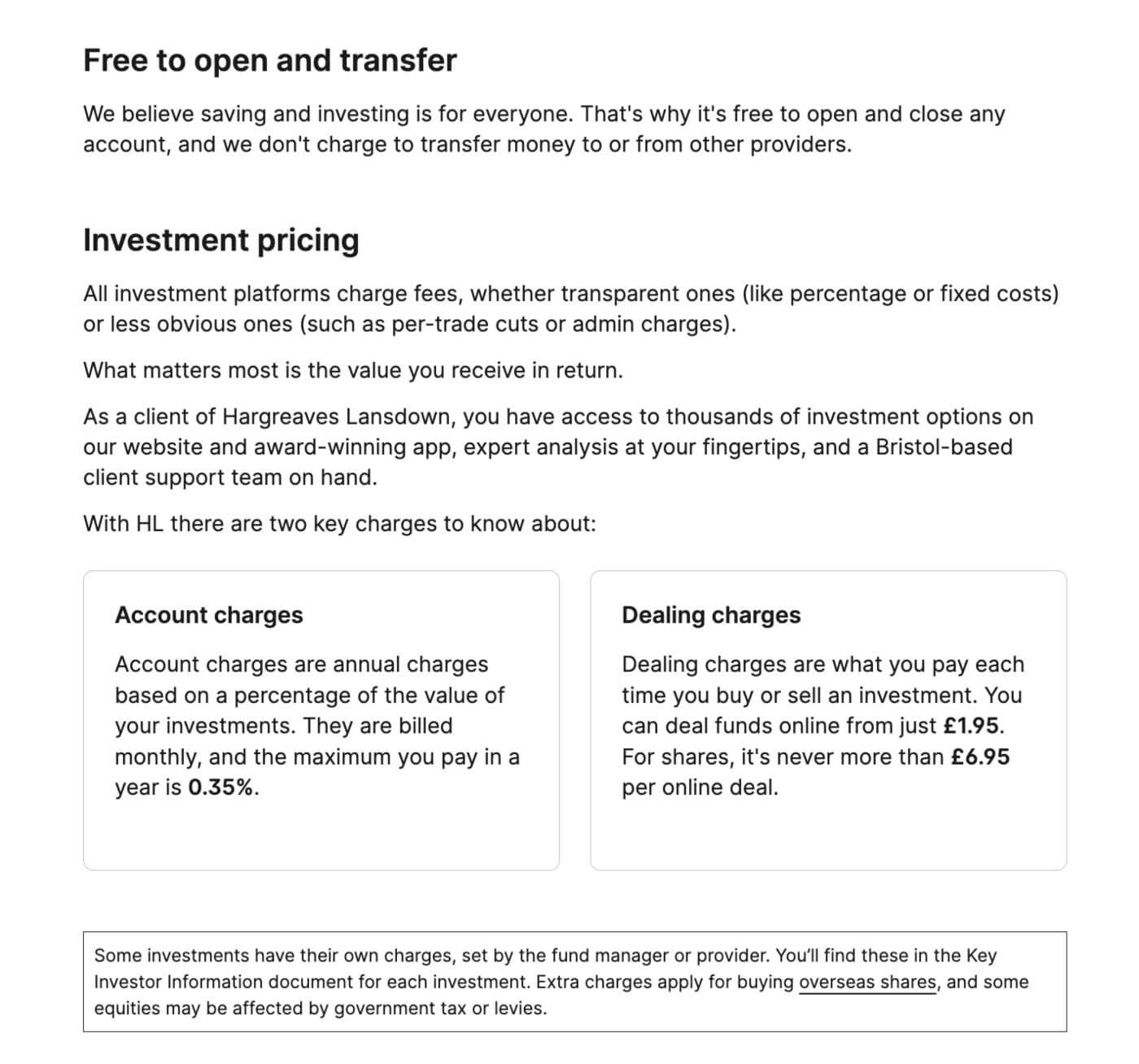
Hargreaves Lansdown charges an annual account charge, calculated and billed monthly, based on what you hold. Funds are tiered: 0.35% on the first £250,000, 0.25% from £250,000 to £1mn, 0.10% from £1mn to £2mn, and no charge above £2mn.
Shares, ETFs, investment trusts, bonds, gilts and VCTs are charged at 0.35% a year but capped at £12.50 a month, so £150 a year at most. The Lifetime ISA is 0.25% capped at £3.75 a month, and the Junior ISA carries no account charge at all. It is free to open an account, free to hold uninvested cash and free to transfer out.
Interactive Investor
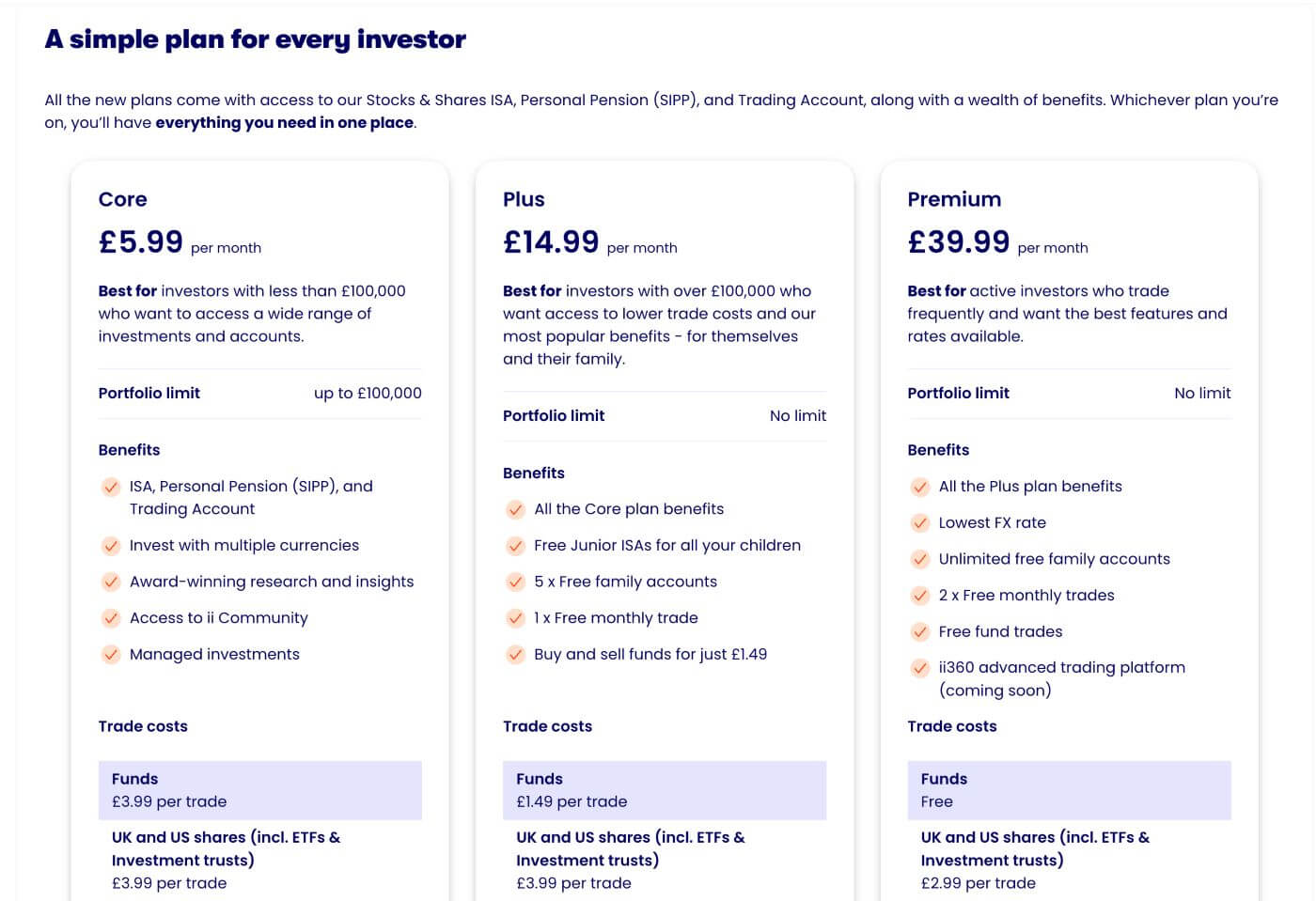
Interactive Investor charges a flat monthly fee rather than a percentage, so the cost does not grow with your portfolio. Core is £5.99 a month and is limited to portfolios up to £100,000. Plus is £14.99 a month with no limit, and Premium is £39.99 a month.
One subscription covers your ISA, SIPP and Trading Account together, and the pension administration fee is already included: £2.50 including VAT within Core, and £6 including VAT within Plus and Premium. There is no separate SIPP charge on top. If your portfolio passes £100,000 you move from Core to Plus. Transfers in and out are free.
Hargreaves Lansdown
Fund deals placed online cost £1.95 each. Share deals, which includes ETFs, investment trusts, gilts and bonds, cost £6.95 per trade if you placed between zero and 19 deals the previous calendar month, dropping to £3.95 if you placed 20 or more.
There is no dealing charge at all when you invest by monthly Direct Debit, which makes regular investing free. Junior ISA dealing is free, and Junior SIPP share deals are always £3.95.
Interactive Investor
Dealing costs depend on your plan. On Core, funds and UK and US shares are £3.99 per trade, and other international shares are £9.99. On Plus, funds fall to £1.49 while UK and US shares stay at £3.99 and other international shares are £7.99. On Premium, fund trades are free, UK and US shares are £2.99 and other international shares are £5.99.
Regular investing is free on all three plans. Plus and Premium also include monthly trading credit, £3.99 on Plus and £5.98 on Premium, which is the equivalent of one and two UK or US share trades respectively. The credit lasts 31 days and cannot be carried over.
Hargreaves Lansdown
Extra charges apply to overseas share dealing, and Hargreaves Lansdown does not publish a single headline currency conversion rate on its main charges pages, so check the overseas dealing terms before trading in foreign currency.
Government taxes apply as they do everywhere: 0.5% stamp duty on UK share purchases, a £1.50 PTM levy on UK share trades over £10,000, 1% Irish stamp duty, and financial transaction taxes of 0.2% to 0.4% on certain French, Spanish and Italian shares. Hargreaves Lansdown negotiates discounts on the ongoing charge of more than 500 funds, averaging around 17%.
Interactive Investor
Foreign exchange is charged at 0.75% on Core. Plus pays 0.75% on the first £50,000 converted and 0.25% above that, while Premium pays a flat 0.25%. Dividend reinvestment is £0.99 per holding on Core and Plus, and free on Premium.
Other charges are clearly listed: telephone trades are £49, same day withdrawals are £15, and there is a £5 a month charge for non UK residents. The same government taxes and levies apply as with any UK broker. You can model either platform against your own balance using our UK broker fees calculator.
Hargreaves Lansdown
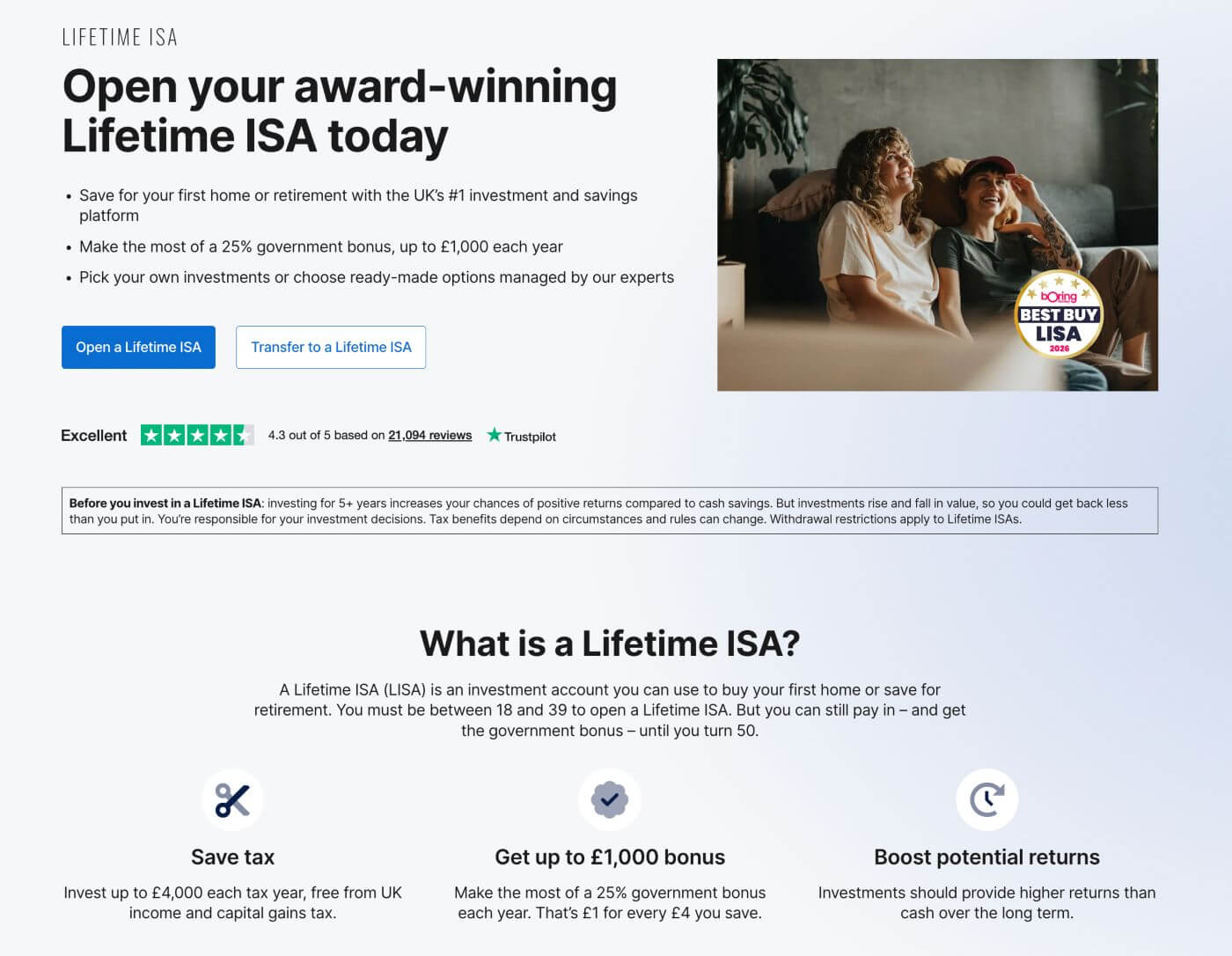
Hargreaves Lansdown has the broader range. You can hold a Fund and Share Account, a Stocks and Shares ISA, a Lifetime ISA, a Junior Stocks and Shares ISA, a SIPP, a Junior SIPP, drawdown and a bare trust account, plus a Cash ISA and the Active Savings service for cash.
The Lifetime ISA and the Junior ISA are the two that matter most in this comparison, because Interactive Investor does not offer a Lifetime ISA at all. The Junior ISA is free of account and online dealing charges, which makes it a genuinely low cost option for children. See our guide to the best stocks and shares ISAs for how it compares more widely.
Interactive Investor
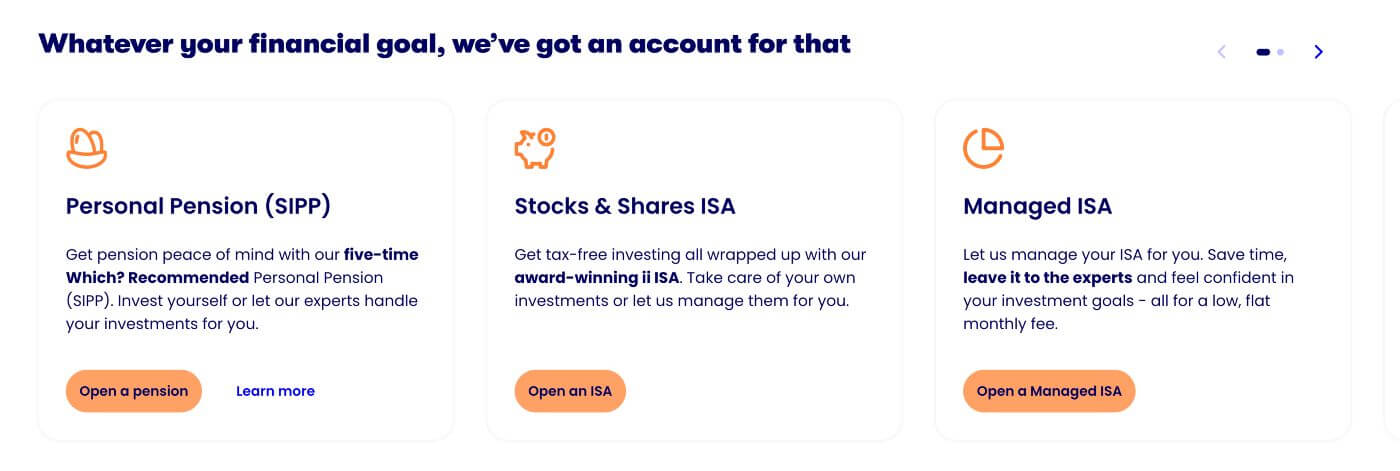
Interactive Investor covers a Trading Account, a Stocks and Shares ISA, a Managed ISA, a Personal Pension (SIPP), Managed Portfolios and a Junior ISA. The important detail is that the Junior ISA is only available on the Plus and Premium plans, not on Core.
There is no Lifetime ISA and no cash savings equivalent to Active Savings. A Joint Trading Account is available at £14.99 a month, charged separately from your other accounts. Our best SIPP providers guide puts the Interactive Investor pension alongside its main rivals.
Hargreaves Lansdown
There is no minimum to open an account and no minimum balance. Because the charge is a percentage, a small pot pays a small amount: £1,000 in funds costs about £3.50 a year, and £5,000 costs about £17.50.
That is the structural advantage of percentage pricing. It scales down as neatly as it scales up, so beginners are not penalised for starting small. The trade off arrives later, when the same percentage applied to a large balance becomes a substantial annual bill.
Interactive Investor
There is no minimum investment either, but the flat fee behaves very differently at the small end. Core costs £71.88 a year whether you hold £500 or £90,000, so on a £1,000 portfolio that is a little over 7% a year before you buy anything.
Flat fees reward size. The larger your balance, the smaller the fee becomes as a percentage, which is exactly the opposite of how Hargreaves Lansdown works. This is the single most important thing to understand about the two platforms.
Hargreaves Lansdown
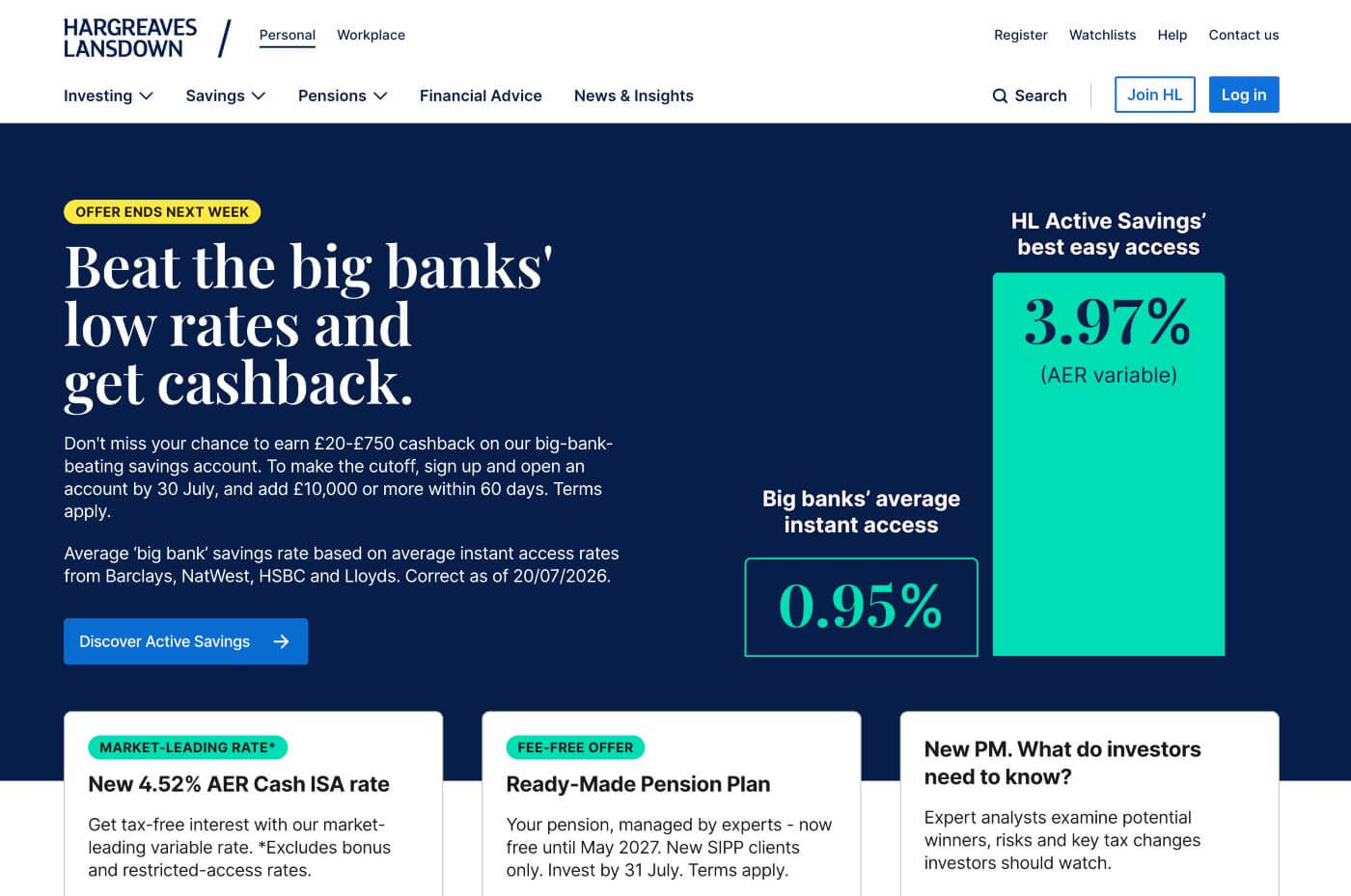
Hargreaves Lansdown is polished and heavily signposted. Account opening is quick, the fund and share research pages are among the most detailed available to UK retail investors, and everything is written for a general audience rather than a trading audience.
The site carries a lot of content, which is a strength if you want research and a mild distraction if you already know what you are buying. Navigation is clear and the checkout style dealing flow is hard to get wrong.
Interactive Investor
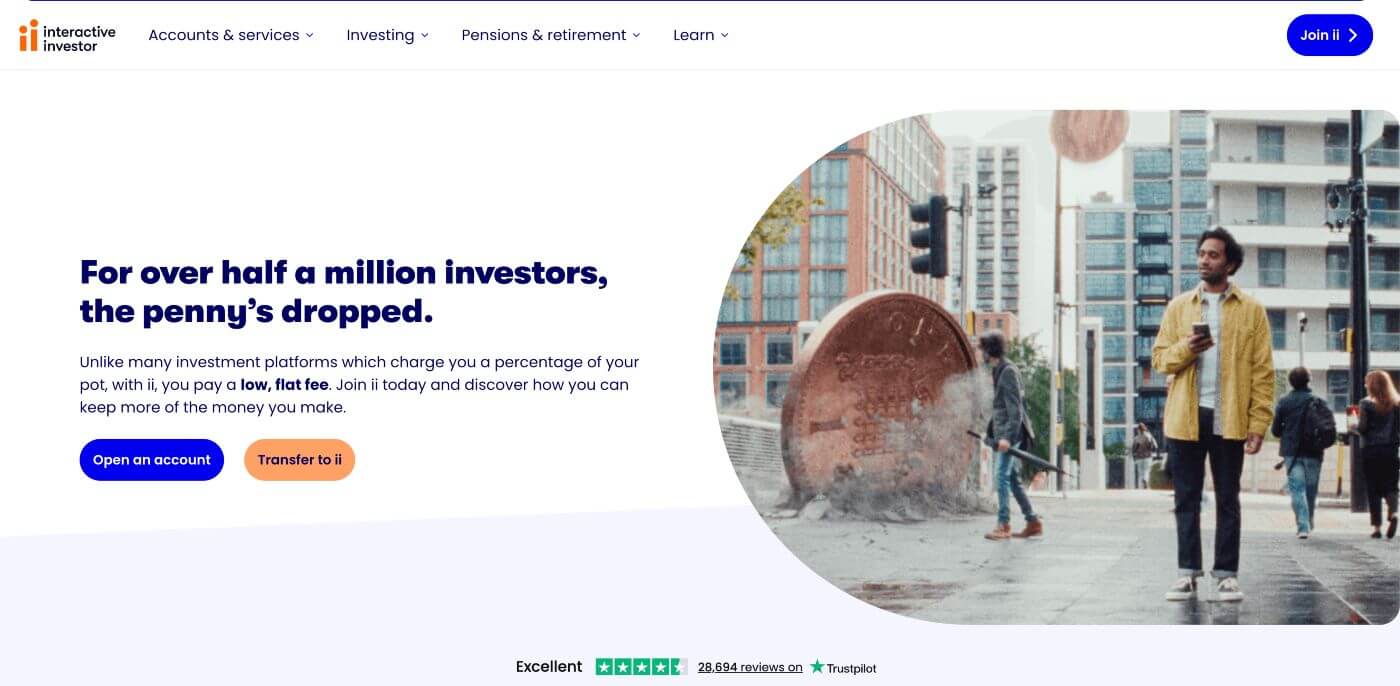
Interactive Investor is cleaner and more functional, with less editorial around the edges. The portfolio view is strong, showing performance, income and allocation clearly, and the account structure is easy to follow once you understand which plan you are on.
It feels more like a tool and less like a magazine. Investors who find the Hargreaves Lansdown site busy tend to prefer it, while those who want research alongside their dealing screen tend not to.
Hargreaves Lansdown
The Hargreaves Lansdown app is well established and generally well rated, covering dealing, valuations, research and account admin. It carries most of what the website does, including the fund research notes, which is unusual for a platform app.
It is designed for periodic checking and occasional dealing rather than constant monitoring, which suits the customer base.
Interactive Investor
The Interactive Investor app handles dealing, valuations, watchlists and regular investing, and it is a competent everyday tool. The portfolio and performance screens carry across well from the desktop platform.
Research is thinner in the app than on the website, so investors who lean on analysis tend to do that part on a larger screen.
Hargreaves Lansdown
Regular monthly investing by Direct Debit is free and is the main automation feature, alongside automatic dividend reinvestment. There are ready made portfolios and a Ready-Made Pension Plan for people who would rather not choose funds themselves.
Research tools are the real strength here: the Wealth Shortlist, fund factsheets and in house analysis are more substantial than most competitors offer.
Interactive Investor
Free regular investing is available on every plan, and Interactive Investor publishes model portfolios and a Managed ISA option for people who want the choices narrowed down. Multiple currencies can be held in the SIPP and Trading Account, so you can convert when it suits you rather than on every trade.
Premium adds the ii360 platform, which the pricing page lists as coming soon at the time of writing, so treat it as a future benefit rather than a current one.
Hargreaves Lansdown
A very wide range of UK and overseas shares, covering the main UK market plus US, European and other international exchanges. Extra charges apply to overseas dealing, and government taxes such as stamp duty apply on purchase.
For a mainstream investor wanting to hold individual companies alongside funds, the choice is comprehensive and the research support behind it is a genuine differentiator.
Interactive Investor
Also a wide range, covering UK, US and international shares. Interactive Investor separates pricing into UK and US shares on one hand and other international markets on the other, which matters if you buy outside the two main markets.
It is a member of the London Stock Exchange, and it offers shareholder voting rights on every plan, which not all platforms make straightforward.
Hargreaves Lansdown
Thousands of funds, ETFs and investment trusts. Hargreaves Lansdown negotiates discounts on the ongoing charge of more than 500 funds, saving an average of around 17% on those charges, which offsets part of the account charge for fund heavy portfolios.
Note the charging split: funds are tiered with no overall cap until £250,000, whereas ETFs and investment trusts fall under the £12.50 a month cap. Holding trackers as ETFs rather than funds can therefore cost noticeably less on a large balance.
Interactive Investor
A similarly broad range of funds, ETFs and investment trusts, with no percentage charge on any of it because the platform fee is flat. Fund dealing costs £3.99 on Core, £1.49 on Plus and nothing on Premium.
For a large fund portfolio this is where the flat fee structure is at its most persuasive, because the annual platform cost stays the same whether you hold £50,000 or £500,000.
Hargreaves Lansdown
Beyond funds and shares, Hargreaves Lansdown offers bonds and gilts, VCTs, a Cash ISA and the Active Savings service, which lets you access savings rates from several banks in one place. There is no charge for the savings accounts.
There is no CFD or leveraged trading, and no cryptocurrency. This is a long term investment platform rather than a trading venue.
Interactive Investor
Bonds, gilts, investment trusts and VCTs are available, along with cash savings. Multiple currency balances can be held in the SIPP and Trading Account, which is useful for international investors.
There is no CFD account, no leverage and no cryptocurrency. Like Hargreaves Lansdown, it is built for investing rather than trading.
Hargreaves Lansdown
Hargreaves Lansdown Asset Management Limited, company number 1896481, is authorised and regulated by the Financial Conduct Authority under firm reference number 115248. The Active Savings service is provided by Hargreaves Lansdown Savings Limited under firm reference number 915119.
Hargreaves Lansdown plc has been listed on the London Stock Exchange and is one of the longest established names in UK retail investing, with more than 45 years of trading history.
Interactive Investor
Interactive Investor Services Limited, company number 02101863, is authorised and regulated by the Financial Conduct Authority under firm reference number 141282. Its registered office is 201 Deansgate, Manchester.
It is a member of the London Stock Exchange, and it has been part of Aberdeen since May 2022, which gives it the backing of a large listed asset manager.
Hargreaves Lansdown
Eligible investments and cash held with Hargreaves Lansdown are covered by the Financial Services Compensation Scheme up to £85,000 per person, per authorised firm, if the firm fails.
Client assets are held separately from the firm’s own money under the FCA client asset rules. It is worth being clear that this protection covers firm failure only. It never covers investment losses, and the value of what you hold can still fall.
Interactive Investor
Eligible investments and cash held with Interactive Investor are covered by the Financial Services Compensation Scheme up to £85,000 per person, per authorised firm, on the same basis.
The £85,000 figure is the investment limit. The separate deposit protection limit for money held as a bank deposit rose to £120,000 on 1 December 2025, but that applies to banks and building societies rather than to investments held on either of these platforms.
Hargreaves Lansdown
Telephone, email and secure message, with the helpdesk based in Bristol. Phone support is the headline feature and is one of the reasons long standing clients stay, particularly for pension queries where speaking to someone matters.
The help pages are thorough, and the charges pages in particular are unusually clear about what you will pay.
Interactive Investor
Telephone, email and a help centre, with a UK based team. Interactive Investor also runs the ii Community, a discussion forum included on every plan, which is a useful and slightly unusual addition.
Telephone dealing is available but expensive at £49 a trade, so it is a last resort rather than a routine option.
Hargreaves Lansdown
Service is generally well regarded and the firm has won a large number of awards for it. At busy periods, such as the run up to the ISA deadline in early April, waiting times lengthen as they do across the industry.
Transfers in from other providers commonly take several weeks, which is normal rather than a platform specific problem.
Interactive Investor
Service is generally reported as solid and straightforward. The help centre is well organised and the charges documentation, including a downloadable full list of charges, is easy to find.
As with any platform, transfers in take time. Neither firm charges for transfers in or out, so the cost of moving is your time rather than your money.
Hargreaves Lansdown
This is Hargreaves Lansdown’s strongest suit. The in house research team publishes fund and share analysis, market commentary and a regular newsletter, and the Wealth Shortlist gives a curated starting point for fund selection.
The material is genuinely useful for a self directed investor who wants a view without paying for advice, though it is worth remembering it is research and not personal recommendation.
Interactive Investor
Interactive Investor publishes award winning research and insight, including model portfolios and regular editorial from its own team. The coverage is strong on investment trusts in particular.
It is less encyclopaedic than Hargreaves Lansdown but more opinionated, which some investors prefer.
Hargreaves Lansdown
Calculators, a Wealth Shortlist, fund factsheets and retirement planning tools. There is no practice or demo account, because the platform is not aimed at short term trading.
The pricing pages include worked examples showing exactly how a monthly charge is calculated, which is more transparency than most platforms offer.
Interactive Investor
The ii Community forum is included on every plan and is an active place to read what other private investors are doing. Shareholder voting rights are included as standard, which suits investors who want a say in the companies they own.
There is no demo account here either. Tools focus on portfolio analysis rather than trade simulation.
Hargreaves Lansdown
Best for someone who wants research and guidance built into the platform, and who values a phone number. If you would rather read a fund note before buying than work it out yourself, this is the more supportive environment.
Interactive Investor
Best for someone who has already decided what they want to own and wants to hold it as cheaply as possible at scale. The learning material is good but the platform assumes a little more prior knowledge.
Hargreaves Lansdown
Investors with smaller balances, anyone who wants a Lifetime ISA or a free Junior ISA, and people who value in house research and telephone support. Also strong for regular monthly investors, because Direct Debit dealing is free.
Interactive Investor
Investors with larger portfolios, particularly fund heavy ones, who want the platform cost to stop growing. Also households, because Plus and Premium let you add family members and Junior ISAs at no extra monthly fee.
Hargreaves Lansdown
Investors with large fund portfolios, where 0.35% with no cap below £250,000 becomes expensive. On £200,000 in funds that is £700 a year. Also frequent traders, since £6.95 a deal adds up quickly below the 20 trade threshold.
Interactive Investor
Beginners with small balances, where £71.88 a year on Core is a heavy drag on a few thousand pounds. Also anyone who needs a Lifetime ISA, which Interactive Investor does not offer, or a Junior ISA on the cheapest plan.
Hargreaves Lansdown
For funds, Hargreaves Lansdown is cheaper up to roughly £20,500 invested, because 0.35% of that is about £72, which is what Core costs for a year. Below that the percentage wins; above it the flat fee does.
For shares, ETFs and investment trusts the £12.50 monthly cap means you never pay more than £150 a year, which changes the picture at the top end.
Interactive Investor
Above roughly £20,500 the flat fee starts to win, and the gap widens fast. On £200,000 in funds, Core is not available because of the £100,000 limit, so you would pay £179.88 a year on Plus against £700 at Hargreaves Lansdown.
One nuance worth knowing: for a portfolio held entirely in shares and ETFs above £100,000, Hargreaves Lansdown’s £150 a year cap is actually below the £179.88 cost of Interactive Investor Plus. Dealing frequency then decides it. Run your own numbers with our broker fees calculator.
Cons
Pros
Cons
Pros
Hargreaves Lansdown
Hargreaves Lansdown is the better choice for smaller portfolios, for anyone who wants a Lifetime ISA or a free Junior ISA, and for investors who want research and a phone number included. Percentage pricing means you pay little while you are building up.
Interactive Investor
Interactive Investor is the better choice once your portfolio is comfortably into five figures, especially if you hold funds. A fixed monthly cost that never grows is a powerful thing over a long investing life, and it covers the whole family on the higher plans.
Hargreaves Lansdown
Choose Hargreaves Lansdown if you are starting out, if you want a Lifetime ISA, if you invest monthly by Direct Debit, or if in house research and telephone support genuinely matter to you.
Interactive Investor
Choose Interactive Investor if you have more than about £20,000 invested, if you hold funds rather than only shares, or if you want an ISA, a SIPP and a Trading Account covered by one predictable monthly fee.
Risk disclaimer
This article is for general information and education. It is not personal financial advice and does not take account of your circumstances. When you invest, your capital is at risk and you may get back less than you put in. Past performance is not a guide to future returns.
Tax treatment depends on your individual circumstances, and ISA and pension rules may change. If you are unsure whether a product is right for you, seek advice from an FCA authorised adviser.
Fees and product details were checked on 6 August 2026 against the providers' own published charges pages and may have changed since. Always confirm current terms on the provider's own website.
0.35% a year | Funds from £1.95
Capital at risk.
Flat fee from £5.99 a month
Capital at risk.
It depends on how much you have invested. Hargreaves Lansdown charges 0.35% a year on funds, so a £5,000 portfolio costs about £17.50. Interactive Investor Core costs £5.99 a month, or £71.88 a year, regardless of size. The crossover is around £20,500 invested: below that Hargreaves Lansdown is cheaper, above it Interactive Investor is.
Dealing charges can shift the answer. If you invest monthly by Direct Debit, Hargreaves Lansdown charges nothing to deal, while Interactive Investor also offers free regular investing on every plan.
Neither is better in every situation, and the honest answer depends on your balance and what you want to hold. Interactive Investor suits larger, fund heavy portfolios because the flat fee stops growing. Hargreaves Lansdown suits smaller portfolios, anyone wanting a Lifetime ISA or a free Junior ISA, and investors who want research and telephone support included.
If you are choosing your first platform with a modest amount to invest, Hargreaves Lansdown is usually the cheaper starting point. If you are transferring a larger pot, run both through our UK broker fees calculator first.
No. Interactive Investor does not offer a Lifetime ISA. Hargreaves Lansdown does, charged at 0.25% a year capped at £3.75 a month. If a Lifetime ISA is part of your plan, whether for a first home or for retirement, that single fact may settle the decision for you.
Hargreaves Lansdown, comfortably. Its Junior ISA carries no account charge and no online dealing charge at all. Interactive Investor includes free Junior ISAs, but only on the Plus plan at £14.99 a month or Premium at £39.99 a month, so you need to be paying for one of those plans anyway.
If a children’s pot is your main reason for opening an account, Hargreaves Lansdown is the lower cost route.
Hargreaves Lansdown for smaller ISA balances, Interactive Investor once you are past roughly £20,500. Both offer the full £20,000 annual allowance and neither charges to transfer out.
One nuance: Hargreaves Lansdown caps its charge on shares, ETFs and investment trusts at £12.50 a month, so an ISA held entirely in ETFs never pays more than £150 a year. Our guide to the best stocks and shares ISAs compares both against the wider market.
Interactive Investor includes the pension administration fee in the monthly plan, £2.50 including VAT on Core and £6 including VAT on Plus and Premium, with no separate SIPP charge. Hargreaves Lansdown applies the same 0.35% account charge to a SIPP as to other accounts, with the £12.50 monthly cap on shares and ETFs.
For a large pension held in funds, the flat fee is usually the cheaper structure. See our best SIPP providers guide for the wider picture.
Both are authorised and regulated by the Financial Conduct Authority. Hargreaves Lansdown Asset Management Limited holds firm reference number 115248, and Interactive Investor Services Limited holds firm reference number 141282.
Eligible investments at both are covered by the Financial Services Compensation Scheme up to £85,000 per person, per firm, if the firm fails. That protection does not cover investment losses, and the value of your investments can still fall.
Yes to both. Neither firm charges an exit or transfer fee, so moving between them costs you time rather than money. Always use the receiving provider’s transfer process rather than withdrawing and reinvesting, which would waste your ISA allowance for the year.
You can also hold accounts with both, though you can only pay new money into one stocks and shares ISA per tax year. Our Hargreaves Lansdown review and Interactive Investor review cover the transfer process for each in more detail.
Compare the best UK brokers side by side.
Disclaimer
The information provided on this page and throughout the website is for general information purposes only and does not constitute financial advice. It is important that you conduct your own research and consider your own personal circumstances before making any investment decisions.
While we strive to provide accurate product information at the time of publication, the information may be subject to change by the provider at any time. Please always verify the product information before making any decisions. Past results do not guarantee future profits.
If you use some of the links on Your Wallet Manager, we may receive a small fee from our partners, supporting the website’s free usage. However, please be assured that our editorial content is never influenced by these links. We include them to help us keep the lights on and to support our mission of helping people make informed financial decisions regarding their wallet’s most important spendings.
Thank you for your understanding and support!
Adding {{itemName}} to cart
Added {{itemName}} to cart