




















UK Inflation 2026: What The 3.5% Rise Means For Investors

Introduction
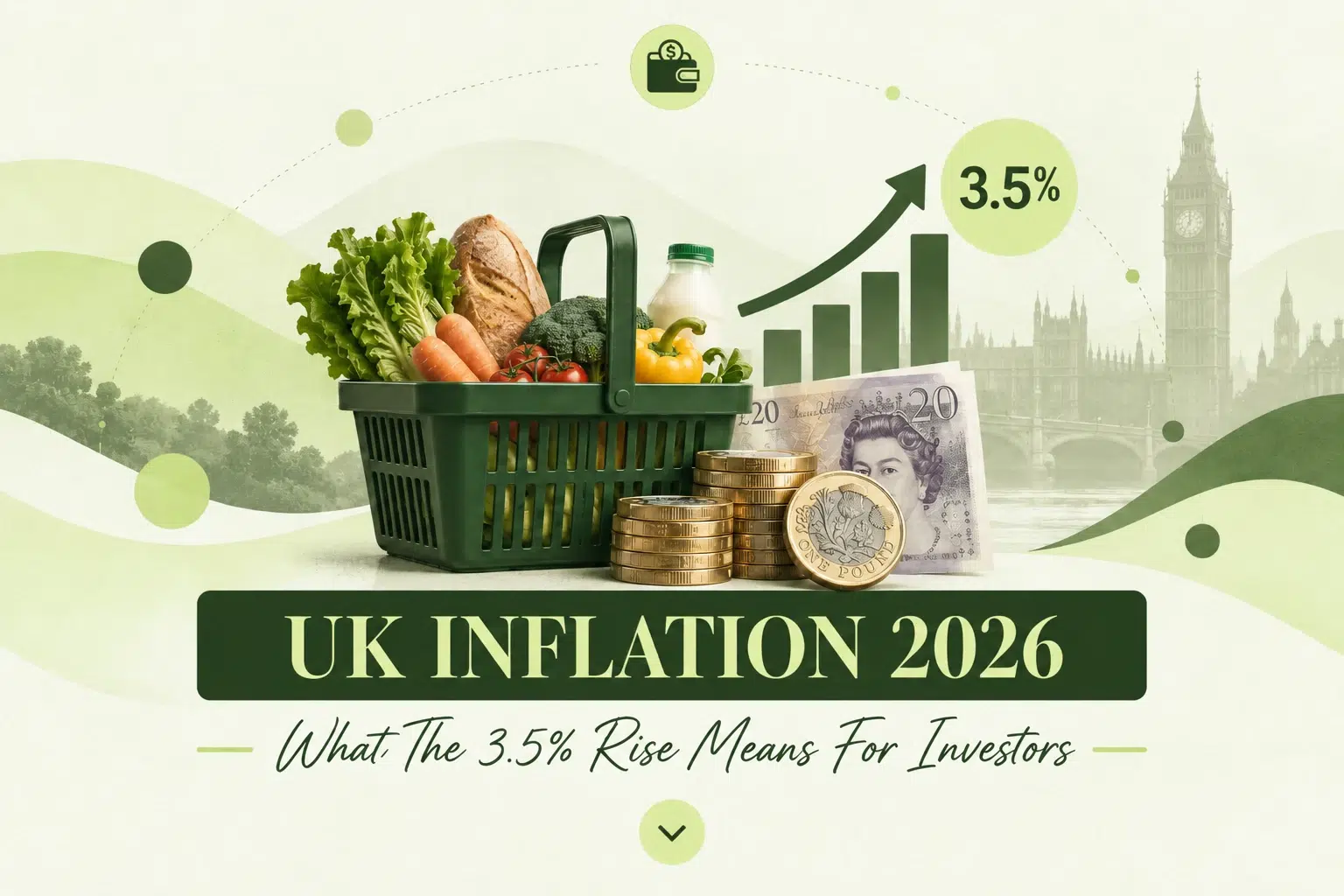
UK inflation rose to 3.5% in the year to September 2026, up from 3.1% in August, according to figures published by the Office for National Statistics on 21 October 2026. That is the highest annual rate since October 2025, and it lands two weeks before the next Bank of England interest rate decision on 5 November.
For anyone holding a Stocks and Shares ISA, a SIPP or a cash savings account, the useful question is not whether the headline number feels uncomfortable. It is what, if anything, it should change. This article sets out what the data says, what sits underneath it, and which parts of it are worth acting on.
The value of investments can fall as well as rise and you may get back less than you invest. This article is for information and education only and is not financial advice. Tax treatment depends on individual circumstances and may change.
What The 3.5% UK Inflation Figure Actually Says
The Consumer Prices Index, or CPI, measures how much a representative basket of goods and services has changed in price over twelve months. A reading of 3.5% means that basket cost 3.5% more in September 2026 than it did in September 2025. It does not mean prices rose 3.5% during the month of September alone.
Three related measures moved in the same direction, published in the ONS consumer price inflation bulletin on 21 October 2026, and that breadth matters more than the headline on its own.
| Measure | September 2026 | August 2026 |
|---|---|---|
| CPI | 3.5% | 3.1% |
| CPIH | 3.6% | 3.3% |
| Core CPI | 2.8% | 2.6% |
| CPI services | 3.7% | 3.4% |
Source: Office for National Statistics, Consumer price inflation, UK: September 2026. Core CPI excludes energy, food, alcohol and tobacco. Verified 22 October 2026.
Core inflation strips out the most volatile items, so when it climbs alongside the headline the increase is harder to write off as a one-off. Services inflation matters for a different reason: it is the measure the Bank of England watches most closely, because services prices are driven largely by domestic wages rather than by imported costs.
The Detail Underneath The Headline
Transport made the largest upward contribution, with its annual rate rising from 4.6% to 6.6%. Motor fuels did most of that work. Petrol reached 169.5 pence per litre and diesel 192.5 pence per litre, leaving motor fuel prices 29.8% higher than a year earlier.
Housing and household services added further pressure, with its annual rate rising from 4.9% to 5.3%. The largest offsetting downward contribution came from restaurants and hotels, where hotel prices rose by less than they had a year earlier.
The composition is the part worth noting. Fuel-driven inflation can unwind quickly if oil prices fall back. Services inflation, running at 3.7%, tends to be far stickier, because wage costs rarely reverse.
UK Inflation In Context: Thirteen Months Of Data
UK inflation fell through the first half of 2026, reaching a low of 2.6% in June, before turning back up across July, August and September. The chart below plots the full thirteen-month path. The shape of it, a steady decline followed by a three-month climb, is what has changed the conversation about interest rates.
Why The Growth Figures Matter Too
Inflation is only half of what the Bank of England has to weigh. On 15 October the ONS reported in its monthly GDP estimate that the UK economy grew 0.1% in August, after an unrevised 0.4% in July. Across the three months to August, output was 0.7% higher than in the previous three months and 1.8% higher than a year earlier.
The sector detail was uneven. Manufacturing output rose 1.2% on the month and production 0.8%, while services were flat, construction fell 0.2% and consumer-facing services fell 0.3%.
That mix matters for policy. A central bank facing a shrinking economy has a reason to tolerate above-target inflation for a while. A central bank facing inflation that is rising while output keeps expanding has considerably less cover.
What Higher UK Inflation Means For Savers And Investors
Bank Rate has stood at 3.75% through the last three Monetary Policy Committee meetings, in June, July and September 2026. The September decision was a 6 to 3 split, with Megan Greene, Catherine L Mann and Huw Pill all voting to raise it to 4%. The Committee said risks to the inflation outlook were tilted to the upside. The next scheduled decision is 5 November 2026.
None of that tells you what will happen. It does tell you that three of the nine members already judged a rise to be justified on the August reading of 3.1%, before the September figure of 3.5% was published. Rate expectations also move the long end of the gilt curve, which is what sets annuity pricing, so the effect reaches people approaching retirement as well as those still building.
Cash Is Not Automatically Safe
With UK inflation at 3.5%, a savings account paying less than that loses purchasing power every year, even though the balance on the statement never falls.
Bond Prices Move Before The Decision Does
Expectations of higher rates push existing bond prices down and yields up. If you hold a bond fund inside an ISA or SIPP, that repricing happens whether or not the Bank acts in November.
Shares Hedge Inflation Over Decades, Not Quarters
Companies can raise prices over time, which is why equities have historically outpaced inflation across long periods. Over any single quarter the relationship is close to random.
Real Return Is The Number That Counts
A portfolio returning 5% while inflation runs at 3.5% is gaining roughly 1.5% in purchasing power. Measuring in real rather than nominal terms changes how a year actually looks.
If you want to see what the gap between a nominal and a real return does over a long holding period, our compound interest calculator lets you run the same monthly contribution at two different growth rates and compare the end figures side by side.
Compare UK investing platforms before you move any money
What To Ignore
Two things. The first is any confident forecast of where Bank Rate will sit in a year. The September vote split 6 to 3 among the nine people with the most information available, which is a fair measure of how open the question still is.
The second is the urge to rebuild a long-term portfolio around a single monthly data release. One CPI reading does not change the case for holding a diversified, low-cost portfolio over decades. It may change the case for leaving a large balance in a poorly paying savings account, which is a narrower and much more practical decision.
It is also worth separating UK and US policy. The Federal Reserve raised its target range in September 2026, and we looked at what that meant for UK investors at the time, but the Bank of England sets Bank Rate on UK data. The two can and do move in different directions.
Key Takeaways
UK Inflation Rose To 3.5% In September 2026
Up from 3.1% in August, with core inflation at 2.8% and services inflation at 3.7%, so the increase was broad rather than isolated to one category.
The Next Bank Rate Decision Is 5 November 2026
Bank Rate is 3.75%, and three of the nine Monetary Policy Committee members voted for a rise to 4% back in September.
Check Real Returns, Not Headline Balances
Any savings or investment return below 3.5% is currently losing ground against UK inflation, even while the balance itself keeps growing.
Common Questions
No. The figure compares September 2026 with September 2025, so it covers twelve months rather than one. Your own rate will also differ from the headline, because the index uses an average basket rather than your basket.
No decision has been made. Bank Rate is 3.75%, and at the September meeting three of the nine Committee members voted for a rise to 4% while six voted to hold. The outcome is published on the day of the meeting.
That is a personal decision and nothing here is advice, but two points are worth weighing. Cash held at a rate below inflation loses purchasing power, and moving long-term money out also means choosing when to move it back, which is a second decision just as hard as the first.
Services prices are driven largely by domestic wage costs rather than by imported goods prices, so they indicate whether inflation has become embedded in the UK economy. Services inflation rose to 3.7% in September 2026.
Sources: ONS, Consumer price inflation, UK: September 2026; ONS, GDP monthly estimate, UK: August 2026; Bank of England, Monetary Policy Summary, September 2026; Bank of England, upcoming MPC dates. All verified 22 October 2026.
The value of investments can fall as well as rise and you may get back less than you invest. This article is for information and education only and is not financial advice. Tax treatment depends on individual circumstances and may change.